Soh Kam Yung commented on Home: Habitat, Range, Niche, Territory by Martha Wells
Can be read on-line at [ www.tor.com/2021/04/19/home-habitat-range-niche-territory-martha-wells/ ]
Exploring one universe at a time. Interested in #Nature, #Photography, #NaturePhotography, #Science, #ScienceFiction, #Physics, #Engineering.
I have locked this account. If you would like to follow me, please fill in your Mastodon bio and post at least one toot (a simple introductory toot will do), so I have an idea who you are and that you are a real person, not a robot or a spam account.
This link opens in a pop-up window
Can be read on-line at [ www.tor.com/2021/04/19/home-habitat-range-niche-territory-martha-wells/ ]
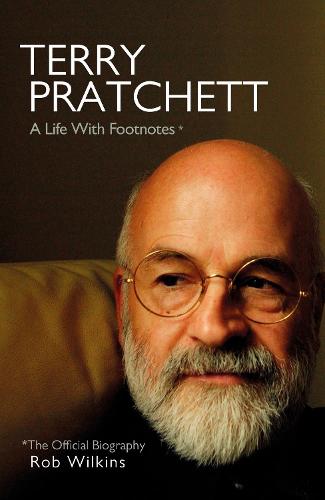
Discovered this via a Tweet by Neil Gaiman [ twitter.com/neilhimself/status/1555459476215431170 ], who found the book "really good. Always readable, illuminating and honest. It made me miss the real Terry."
An interesting collection with good stories from Nadia Afifi, Nick Dichario, Lyndsie Manusos and an interesting take on the zombie invasion story by Sarina Dorie, trying it with school safety protocols that may or may not work.
"The Bahrain Underground Bazaar" by Nadia Afifi: an interesting story of an old woman waiting to die from cancer. To pass the time, she visits the Underground Bazaar, to be immersed in the memories of people who have died. But one memory she experiences haunts her, and she must find out more about the person involved. The journey of discovery would change her attitude towards her coming death and her relationship towards her son and daughter-in-law.
"La Regina Ratto" by Nick Dichario: a man finds himself sharing a flat with talking rats. At first, all is well, and they get along. But then the man gets a new boss at work, who turns …
An interesting collection with good stories from Nadia Afifi, Nick Dichario, Lyndsie Manusos and an interesting take on the zombie invasion story by Sarina Dorie, trying it with school safety protocols that may or may not work.
"The Bahrain Underground Bazaar" by Nadia Afifi: an interesting story of an old woman waiting to die from cancer. To pass the time, she visits the Underground Bazaar, to be immersed in the memories of people who have died. But one memory she experiences haunts her, and she must find out more about the person involved. The journey of discovery would change her attitude towards her coming death and her relationship towards her son and daughter-in-law.
"La Regina Ratto" by Nick Dichario: a man finds himself sharing a flat with talking rats. At first, all is well, and they get along. But then the man gets a new boss at work, who turns out to be a giant Queen rat who begins to dominate his life. In the end, one of his rat friends tells him of a way to get rid of the Queen, but even then, he would never be free of the rats.
"How to Burn Down the Hinterlands" by Lyndsie Manusos: a woman who is a blacksmith has reason to hate her country: her blacksmith mother was taken away and killed when she created a magical sword that could destroy anything. So when the country's king sends a group to persuade her to make another powerful magical sword, she agrees while planning her revenge. But her plans change when she learns more about the group and finds herself sympathizing with them.
"The Glooms" by Matthew Hughes: another tale about the henchman of a (now former) wizard, now retired to a village. But he gets word that two other wizards with whom he crossed paths with in a former story are looking for him, for they believe he holds information on some magical weapons owned by his former master. His journey to escape them would involve running into an unfindable region ruled by a goddess, a journey through a gloomy path, and his elderly neighbour.
"The Homestake Project" by Cylin Busby: a researcher goes deep down into a mine in search of organisms that survive in the depths. Little does she know an accidental injury there would lead to a life-changing view of the world.
"On Vapor, Which the Night Condenses" by Gregor Hartmann: another detective story set on Zephyr, this one has the detective and her partner solve the mystery of a murder and another possible murder attempt at an artist who can produce irresistible scents that make people recall entire environments. Deduction would help her solve the case.
"The Silent Partner" by Theodore McCombs: an antique dealer goes to a house to look at a piece of furniture kept there when its original owner was held in a Japanese-American interment camp during World War Two. But owning the furniture would come with other unusual responsibilities.
"A Tale of Two Witches" by Albert E. Cowdrey: a missing child leads a woman who can treat with spirits to investigate a house formerly occupied by a family with abusive parents, and their strange house guest who may have a hand in previous missing child cases.
"A Civilized and Orderly Zombie Apocalypse per School Regulations" by Sarina Dorie: a standard zombie invasion story that takes place in a school, it involves a teacher who follows regulations to keep her charges from the zombies. But as the story progresses, it becomes apparent that it would have an inevitable, horrible, ending.
"Skipping Stones in the Dark" by Amman Sabet: on a colony ship heading for a distant world, the entity controlling it prizes conformity over individualism. So when people start to exhibit their individual selves, the ship takes what seems like drastic action to isolate them and hope that they return to become members of the ship.
A story that starts out like the usual fantasy of a boy who finds a sword and goes on to be king, but the cast of supporting characters (a wizard, a king and his estranged wife) turn out to be more SF when the wizard talks about travelling between universes, gathering books on science and educating others.
The wizard convinces the king to meet his wife (who has taken over the body of the boy) and the ensuing encounter upends the world as the boy becomes king and, in a twist, does all he can to get an education to make the country a better place.
A very condensed tale of a situation that cries out for a longer tale that looks into how the wizard, the king and his wife came to the world, and what happens after.
This is one of those good tales that starts out funny, but then turns grim and serious, but hopeful, towards the end. In the story, the student body administrator has to deal with handling various student 'emotional support animal' issues (like: are pigs allowed to wallow?). But one student, who claims to have various other issues like ADHD, etc. shows up with a request (actually no: a DEMAND) to be allowed an unusual supernatural support animal that she has somehow restrained using witchcraft.
This humorous situation turns grim when those involved (except the student) realize the animal is intelligent and is suffering due to the restraining spell. But attempts to get the student to let it go only escalate the crisis that can only be resolved by making the student face the truth about herself. Fortunately, that would also involve the university taking the long view about what the student …
This is one of those good tales that starts out funny, but then turns grim and serious, but hopeful, towards the end. In the story, the student body administrator has to deal with handling various student 'emotional support animal' issues (like: are pigs allowed to wallow?). But one student, who claims to have various other issues like ADHD, etc. shows up with a request (actually no: a DEMAND) to be allowed an unusual supernatural support animal that she has somehow restrained using witchcraft.
This humorous situation turns grim when those involved (except the student) realize the animal is intelligent and is suffering due to the restraining spell. But attempts to get the student to let it go only escalate the crisis that can only be resolved by making the student face the truth about herself. Fortunately, that would also involve the university taking the long view about what the student actually achieved during the crises.
An average issue of Interzone, the last to be edited by Andy Cox, with interesting stories by Alexander Glass (three of them here), Cécile Cristofari and Tamika Thompson.
"Wet Dreams" by Rich Larson: a story about a cat who appears to have swallowed something bad and it's consequences.
"The Pain Barrier" by Alexander Glass: a man seeks a way to free a girl from an augmented prison surrounded by a wall of pain. It is only at the end does he realize how things were arranged for him to achieve his objective.
"The Faerie Engine" by Alexander Glass: a Faerie visits a woman to ask for help to fix an engine. When the woman refuses, the Faerie finds a way to get her to help. In the process, the woman learns more about the Faerie world, and we learn it may be more real than fantasy.
"The Soul Doctors" by …
An average issue of Interzone, the last to be edited by Andy Cox, with interesting stories by Alexander Glass (three of them here), Cécile Cristofari and Tamika Thompson.
"Wet Dreams" by Rich Larson: a story about a cat who appears to have swallowed something bad and it's consequences.
"The Pain Barrier" by Alexander Glass: a man seeks a way to free a girl from an augmented prison surrounded by a wall of pain. It is only at the end does he realize how things were arranged for him to achieve his objective.
"The Faerie Engine" by Alexander Glass: a Faerie visits a woman to ask for help to fix an engine. When the woman refuses, the Faerie finds a way to get her to help. In the process, the woman learns more about the Faerie world, and we learn it may be more real than fantasy.
"The Soul Doctors" by Alexander Glass: an investigation by a detective goes wrong, and he gets help from a pair of truck drivers. As the story proceeds, we learn the drivers may be from an alternate world line and in this world, souls can be real and can affect how you live.
"Thank You, Clicking Person" by Jeff Noon: a machine learns about the world through clicked images and makes some disturbing conclusions from the lack of people seen in clicked photos.
"Subira's Lattice" by Val Nolan: an enslaved girl on Venus eventually gets freedom and learns of a secret after a catastrophe overtakes the planet, and she is one of the few survivors.
"Walking in from the West" by Charles Wilkinson: an upper-class man who looks down on his neighbours is forced to accommodate them for a while due to a flood. As the story progresses, we learn about his high-class servant who takes liberties with his wealth and is punished as a result, and a strange ability of his neighbour's wife which will have consequences for the man.
"Wind, river, angel song" by Cécile Cristofari: in a future when a strange disease can turn a human into a tree after heading an 'angel' sing, one new mother, who has been infected, has to struggle to raise her daughter, while hoping never to hear the singing.
"The Thing About Ants and Astronauts" by Justen Russell: an astronaut in a scout ship investigates a mysterious dark nebula while thinking back to a time when her family had to deal with ants and realizes the connection between her situation and the ants investigating the contents of the house.
"Bridget Has Disappeared" by Tamika Thompson: a journalist investigates the mysterious disappearances of his wife, which his wife constantly denies. The investigation would end with her final disappearance, but not before realizing what it may mean for their son and the world.
"Rusting" by Lucy Zhang: a young girl gets infected and starts to 'rust' by turning into metal from the outside in. Eventually, a robot is sent to fetch her out of the house, and they begin an unknown journey into a rusting world.
Can be read on-line at [ www.tor.com/2022/04/27/the-long-view-susan-palwick/ ]
Can be read on-line at [ www.tor.com/2022/04/06/686071-dominica-phetteplace/ ]
Can be read on-line at [ www.tor.com/2022/07/13/the-sisters-of-saint-nicola-of-the-almost-perpetual-motion-vs-the-lurch-garth-nix/ ]
The Fellowship of the Ring is the first of three volumes of the epic novel …
(Note: review based on one of numerous rereading of the book.)
What started out as a request for another story about hobbits (after the success of "The Hobbit") grew in the telling until it became an epic tale about the quest to destroy the One Ring of Sauron; and how it was the 'least of heroes', unlooked-for even by the wise, would prove to be one to fulfil the quest and free Middle-Earth from domination by the Dark Lord.
This book has been released in many editions and in many forms over the years. The one I read was a one-volume edition that celebrates the birth of J.R.R. Tolkien and includes fifty paintings specially commissioned from artist Alan Lee.
Reading it now after watching the Peter Jackson films, it is easy to put the actors in the film into the scenes from the book, modified by the illustrations of Alan …
(Note: review based on one of numerous rereading of the book.)
What started out as a request for another story about hobbits (after the success of "The Hobbit") grew in the telling until it became an epic tale about the quest to destroy the One Ring of Sauron; and how it was the 'least of heroes', unlooked-for even by the wise, would prove to be one to fulfil the quest and free Middle-Earth from domination by the Dark Lord.
This book has been released in many editions and in many forms over the years. The one I read was a one-volume edition that celebrates the birth of J.R.R. Tolkien and includes fifty paintings specially commissioned from artist Alan Lee.
Reading it now after watching the Peter Jackson films, it is easy to put the actors in the film into the scenes from the book, modified by the illustrations of Alan Lee of the various places in Middle-Earth. And after all these years, the words in the book still have the 'power' to bring the reader to Middle-Earth and put you in the footsteps of the Fellowship of the Ring as they strive to do what they can to thwart the plans of Sauron and distract him for the peril that is slowly entering his stronghold on hobbit feet.
(Note: this review is about one of my many numerous re-reads of the book.)
"In a hole in the ground there lived ...", well, you probably know who.
A story that started out scribbled on the back of a piece of paper being marked by J.R.R. Tolkien has grown in the telling and now supports a whole mythology set out in the books "The Silmarillion" and "The Lord of the Rings" as well as a multi-billion dollar entertainment industry.
The story of Bilbo Baggins and how he got involved in a quest involving dwarves, a Wizard, elves, men, goblins, wargs (wolves) and, of course, a dragon, is set out in this tale that has been read multiple times by me.
The most important event in the book, almost trivial in its treatment (which it was, at the time) was the discovery of a seemingly innocuous magic ring by Bilbo deep …
(Note: this review is about one of my many numerous re-reads of the book.)
"In a hole in the ground there lived ...", well, you probably know who.
A story that started out scribbled on the back of a piece of paper being marked by J.R.R. Tolkien has grown in the telling and now supports a whole mythology set out in the books "The Silmarillion" and "The Lord of the Rings" as well as a multi-billion dollar entertainment industry.
The story of Bilbo Baggins and how he got involved in a quest involving dwarves, a Wizard, elves, men, goblins, wargs (wolves) and, of course, a dragon, is set out in this tale that has been read multiple times by me.
The most important event in the book, almost trivial in its treatment (which it was, at the time) was the discovery of a seemingly innocuous magic ring by Bilbo deep in the mountains which was to have an impact well after the telling of this tale.
Light-hearted in tone, the story skips gaily from Bilbo's home at Bag End to Rivendell, from the Misty Mountains to Mirkwood, from the Elven King's halls to its final destination; the Lonely Mountain far to the east. It is there that things turn grim as Bilbo finally performs the tasks he was hired to do; to be a burglar.
A good tale and best considered as a stand-alone tale, rather than a 'prequel' to Tolkien's major work, "The Lord of the Rings".
If you want to know more, also consider reading "The Annotated Hobbit" by Douglas A. Anderson and the two volume "The History of The Hobbit" by John D. Rateliff.
This is a lovely, light fantasy story about a cat in ancient Japan who loses her home and goes off on a quest for a new home, carrying with her the tales from her former home as told to her by the other cats that lived there. Through various adventures and encounters with people and animals, she gathers a host of new stories and discovers that the stories are what make a place you live in a home. And she does eventually find a new home, and becomes known as the Cat Who Walked a Thousand Miles.
The fantasy element is in believing that the cat can mostly understand what humans and another animals are saying. Otherwise, it's a straight telling of an adventure story from a cat's point of view.
Can be read online at [ www.tor.com/2009/07/14/the-cat-who-walked-a-thousand-miles/ ]
Became aware of this via this Cory Doctorow post [ pluralistic.net/2022/07/26/aislands/#dead-ringers ] which includes spoilers for the book. But the First part is an interesting general piece on what makes the protagonist of an SF novel different from that from others genres.
An average issue with interesting stories by Alexander Glass and Gary Gibson at the start and end of the magazine.
"Time's Own Gravity" by Alexander Glass: creatures are loose in the land; creatures that feed on time. And only one man can apparently stop them. But who is he, and does he have his own agenda and use for the creatures?
"Soaring, the world on their shoulders" by Cécile Cristofari: in a country at war, one person is tasked with bringing to life a flying creature to aid in the war. But the person disagrees with the purpose and hides while the creature develops and hatches, looking for another way for it to be free.
"A Distant Hum" by John K. Peck: a woman goes to a man to learn of a secret: that an apparently abandoned and disconnect weapons system in a city is still very much alive. And …
An average issue with interesting stories by Alexander Glass and Gary Gibson at the start and end of the magazine.
"Time's Own Gravity" by Alexander Glass: creatures are loose in the land; creatures that feed on time. And only one man can apparently stop them. But who is he, and does he have his own agenda and use for the creatures?
"Soaring, the world on their shoulders" by Cécile Cristofari: in a country at war, one person is tasked with bringing to life a flying creature to aid in the war. But the person disagrees with the purpose and hides while the creature develops and hatches, looking for another way for it to be free.
"A Distant Hum" by John K. Peck: a woman goes to a man to learn of a secret: that an apparently abandoned and disconnect weapons system in a city is still very much alive. And she has plans to use it for her own purposes.
"Captured Dreams of the Dead Machine" by Daniel Bennett: in a future where a computer virus has devastated many systems, a man hunts down ancient film files that have survived. But his latest find may land him in trouble with raiders who prefer the present to the past.
"Warsuit" by Gary Gibson: an interesting story of a scavenger in a war zone who, hiding from a hunting machine, hides in an abandoned combat suit that turns out to be still working and with the download personality of its former occupant. Through a series of arguments, we learn the background of the scavenger and also the suit and how they learn to act together to save one another.