
Novelets: - "How To Care For Your Domestic God" by Clara Madrigano
Short Stories: …
There was apparently an unforeseen delay in the publication of this issue.

Exploring one universe at a time. Interested in #Nature, #Photography, #NaturePhotography, #Science, #ScienceFiction, #Physics, #Engineering.
I have locked this account. If you would like to follow me, please fill in your Mastodon bio and post at least one toot (a simple introductory toot will do), so I have an idea who you are and that you are a real person, not a robot or a spam account.
This link opens in a pop-up window
Novelets: - "How To Care For Your Domestic God" by Clara Madrigano
Short Stories: …
There was apparently an unforeseen delay in the publication of this issue.

Grist’s Imagine 2200: Climate Fiction for Future Ancestors short story contest celebrates stories that offer …
Presented here are the winners and finalist of Grist's climate fiction competition. They all feature people who are coping or trying to cope with a world where more extreme climate change is underway or has happened. The ones I enjoyed are by Jamie Liu, Louis Evans, Cameron Neil Ishee, Rae Mariz, Sanjana Sekhar, Karen Engelsen and by Guglielmo Miccolupi and Laura C Zanetti-Domingues.
"To Labor for the Hive" by Jamie Liu: an interesting story of a woman who takes care of bees. One day she reluctantly enrols in a programme to monitor the weather based on the behaviour of her bees. That would lead to a relationship with a researcher through messaging and, perhaps an opening up after her last relationship ended.
"The Last Almond" by Zoe Young: heavy rains are forecast, and a farmer's land has to be sacrificed to help alleviate the …
Presented here are the winners and finalist of Grist's climate fiction competition. They all feature people who are coping or trying to cope with a world where more extreme climate change is underway or has happened. The ones I enjoyed are by Jamie Liu, Louis Evans, Cameron Neil Ishee, Rae Mariz, Sanjana Sekhar, Karen Engelsen and by Guglielmo Miccolupi and Laura C Zanetti-Domingues.
"To Labor for the Hive" by Jamie Liu: an interesting story of a woman who takes care of bees. One day she reluctantly enrols in a programme to monitor the weather based on the behaviour of her bees. That would lead to a relationship with a researcher through messaging and, perhaps an opening up after her last relationship ended.
"The Last Almond" by Zoe Young: heavy rains are forecast, and a farmer's land has to be sacrificed to help alleviate the flood. The farmer prepares and remember the previous time a flood caused widespread damage and personal loss.
"A Seder in Siberia" by Louis Evans: a family starts the ceremonial dinner with a missing family member, only for him (the eldest brother) to turn up after it starts. The celebration turns tense as family secrets become revealed as the brother explains why he left and why he has now returned, and it involves an event that their father was involved that the resulted in where the family is located now.
"Accensa Domo Proximi" by Cameron Neil Ishee: as people converge to see an artist finally finish an unknown sculpture, one person recognizes it for what it is and realizes the artist has given the community a remembrance of places lost to the rising sea.
"Gifts We Give to the Sea" by Dinara Tengri: a son returns to his home near the Aral Sea in Kazakhstan, in the hopes of reconnecting with his family and, perhaps, help bring part of the sea back to life.
"The Imperfect Blue Marble" by Rae Mariz: a curious child is given the gift of a blue marble by a glassblower. But what he does next with it has echoes with how we should treat another blue marble.
"Cabbage Koora: A Prognostic Autobiography" by Sanjana Sekhar: a story spanning generations as a family spread around the world bond over virtual meetings where they discuss growing their favourite traditional vegetable, in a world where growing things and travelling around gets increasingly difficult in a warming world.
"La Sirène" by Karen Engelsen: in a future of rising sea levels and more deadly storms, a religious facility at sea gives shelter to people who have been affected by pollution, causing them to not develop proper legs. A priest at the shelter dreams about the sea goddess, who will try to destroy them for when humans have done to the sea; unless he can find a way to work with the sea with the help of the affected people.
"The Long In-Between" Andrew Kenneson: a person decides to re-wild his patch of land. But he has to deal with neighbours who don't agree with his methods.
"A Gift of Coconuts" by Melissa Gunn: as a storm hits an island, one family not only has to worry about surviving it, but also about the fate of their father who was out in a boat. As it turns out, one product on the island would have a hand in helping the father find the island again.
"Stasis" by Lovinia Summer: a person undergoes an unusual transformation in preparation for a journey of their village from a desert to the sea: a transformation that would involve a change in microbiome.
"The Blossoming" by Guglielmo Miccolupi, Laura C Zanetti-Domingues: a somewhat hilarious story of a cyclist running away from an angry bull, and then from a flock of sheep. In a flashback, we see who the cyclists, who was wondering what to do with his life, got involved in the situation, which would involve a bunch of rare plants.

Finding seeds of inspiration in the Brothers Grimm, seventeenth-century French lore, and Scottish ballads, Kelly …
A fascinating series of stories, each based on a fairy or folk tale, that then gets turned by the author into her own tales. Some maintain the fairy tale atmosphere, while others take on a fantasy or contemporary tone. I was not familiar with some of the sources used for the stories, but it is worth looking them up after reading the stories here to see the similarities and differences between the source materials and her stories.
The White Cat's Divorce: a rich man who can get anything fears growing old and sets his sons tasks to determine who will inherit his wealth. As usual, the youngest one manages to fulfil the wishes with unusual results when he meets a talking white cat that helps him out. But the strangest result would come when the cat insists on meeting his father.
Prince Hat Underground: …
A fascinating series of stories, each based on a fairy or folk tale, that then gets turned by the author into her own tales. Some maintain the fairy tale atmosphere, while others take on a fantasy or contemporary tone. I was not familiar with some of the sources used for the stories, but it is worth looking them up after reading the stories here to see the similarities and differences between the source materials and her stories.
The White Cat's Divorce: a rich man who can get anything fears growing old and sets his sons tasks to determine who will inherit his wealth. As usual, the youngest one manages to fulfil the wishes with unusual results when he meets a talking white cat that helps him out. But the strangest result would come when the cat insists on meeting his father.
Prince Hat Underground: the relationship between Prince Hat and his lover are interrupted when Prince Hat's former fiancée suddenly appears and whisks him away. The lover then goes on a journey to Iceland and then down underground into another world to find Prince Hat and find out how he wants to live.
The White Road: in a future when an unknown calamity has occurred, a travelling theatre group which also acts as a messenger service travels to the town of Bremen, with a strange white road running alongside them in the distance. It is only when they get to Bremen, and discover a disaster, do they realize that they have to give a realistic performance to save their lives from whatever inhabits the white road.
The Girl Who Did Not Know Fear: a traveller is stuck at an airport, waiting for an available flight during a weather disruption. While there, she learns her child at home is getting scared; a situation which she is struggling to understand when, at last, a flight home opens.
The game of Smash and Recovery: a girl and a boy play games on a distant world while waiting for a long delayed rescue by their parents. But in one of the games, the girl does the unexpected and discovers the truth about herself, hidden in a forbidden area of the planet.
The Lady and the Fox: during a snowy Christmas at a house, a young girl sees a face at a window, whom she later discovers is that of a young man. But at subsequent meetings, when the man only appears when it snows at Christmas, she finds herself falling in love with him. Now, she is determined to discover why he can only appear at that time, and how to keep him in our world.
Skinder's Veil: a man is asked by his friend to help take care of a house in the woods while she is away. He is given strict, and unusual, instructions about who can enter the house. Following the rules, he lets in a series of travellers, both human and non-human, which tell him seemingly disconnected stories that gradually reveal just who the owner of the house really is.

Fiction: - "Scalp" by H.H. Pak - "The Flowers That We Intend To Share" by …
An average issue, with interesting stories by Zohar Jacobs and Yang Wanqing.
"Scalp" by H.H. Pak: a young janitor does his job in a facility where people infected with an extreme addiction are sedated and put into virtual worlds to recover.
"The Flowers That We Intend To Share" by Rajeev Prasad: robots that take care of modified plants in a greenhouse began to develop awareness. The two sons of the parents who own the greenhouse are determined that the robots can explore the world, against the wishes of the parents.
"The Enceladus South Pole Base Named after V.I. Lenin" by Zohar Jacobs: set in an alternate world where the Soviet Union has a base on Enceladus, the story centres about the base commander who discovers that religion is becoming popular as the base, which is against Soviet principles. His attempts to …
An average issue, with interesting stories by Zohar Jacobs and Yang Wanqing.
"Scalp" by H.H. Pak: a young janitor does his job in a facility where people infected with an extreme addiction are sedated and put into virtual worlds to recover.
"The Flowers That We Intend To Share" by Rajeev Prasad: robots that take care of modified plants in a greenhouse began to develop awareness. The two sons of the parents who own the greenhouse are determined that the robots can explore the world, against the wishes of the parents.
"The Enceladus South Pole Base Named after V.I. Lenin" by Zohar Jacobs: set in an alternate world where the Soviet Union has a base on Enceladus, the story centres about the base commander who discovers that religion is becoming popular as the base, which is against Soviet principles. His attempts to stamp out it occur when a major discovery is made, prompting new explorers to come from the Earth. But the new people bring news of changes on Earth, leading the commander to consider a new path for the base and for himself.
"Kardashev's Palimpsest" by David Goodman: in the far, far, future, a Seeker recreates his earlier self to explore his beginning on Earth and his relation with a long-lost companion that, perhaps, is not lost forever.
"The Peregrine Falcon Flies West" by Yang Wanqing, translated by Jay Zhang: a girl makes a trip to the west of China, on a fanciful desire to follow a falcon. But events in this warming world make a change when unknown aliens turn up and turn the climate around, but maybe not for the better in the long term for humanity. The girl, and her interest in birds and their intelligence, may be what is needed to break through and communicate with the aliens.
"Why Don't We Just Kill the Kid In the Omelas Hole" by Isabel J. Kim: an unsettling story of a community people are happy and healthy, except for one child who must suffer in a hole. Then, the child is murdered, and disasters occurs until another child can be found who can suffer on behalf of the community. Conflicts break out between those who say the child must suffer and those who think the community are moral monsters for doing it.
"The Beam Eidolon" by Ryan Marie Ketterer: a conscious planetary entity's peaceful existence is shattered when four people arrive to dig up its earth, cut up its forests and eat its creatures. Now the entity just wants to take revenge for its suffering.
"Lonely Ghosts" by Meghan Feldman: a robotic planetary surveyor keeps asking an unseen entity exploring on a nearby moon whether it is along on the planet, for it is seeing the ghosts of its trainers, and now even doubts the existence of the other explorer.

Epic verse and pulsating paintings merge to shed light on time travel, black holes, gravitational …
A fascinating layman's level approach to explaining about black holes, time warps and warped space. Kip Thorne summarizes much of what he and other researchers now know (and don't know) about them, while also indulging in some speculative thought experiments about the consequences such objects would have in our universe.
But speculation remains speculation, unless there is a way to gather objective evidence about it. Here, Thorne talks about his work in getting the massive LIGO (Laser Interferometer Gravitational-Wave Observatory) up and running, and detecting the gravity waves generated when black holes and other massive celestial objects collide and merge. He also talks about plans for even more massive gravitational wave detectors and can detect the signatures of supermassive black holes and maybe even the gravitational waves generated during the first moments of the Big Bang.
Along with the text are illustrations by Lia Halloran that help put …
A fascinating layman's level approach to explaining about black holes, time warps and warped space. Kip Thorne summarizes much of what he and other researchers now know (and don't know) about them, while also indulging in some speculative thought experiments about the consequences such objects would have in our universe.
But speculation remains speculation, unless there is a way to gather objective evidence about it. Here, Thorne talks about his work in getting the massive LIGO (Laser Interferometer Gravitational-Wave Observatory) up and running, and detecting the gravity waves generated when black holes and other massive celestial objects collide and merge. He also talks about plans for even more massive gravitational wave detectors and can detect the signatures of supermassive black holes and maybe even the gravitational waves generated during the first moments of the Big Bang.
Along with the text are illustrations by Lia Halloran that help put down in images what Thorne is saying.
This is a short but deeply descriptive book about the nature of black holes and warped space that contains up-to-date information about what is currently known about them.
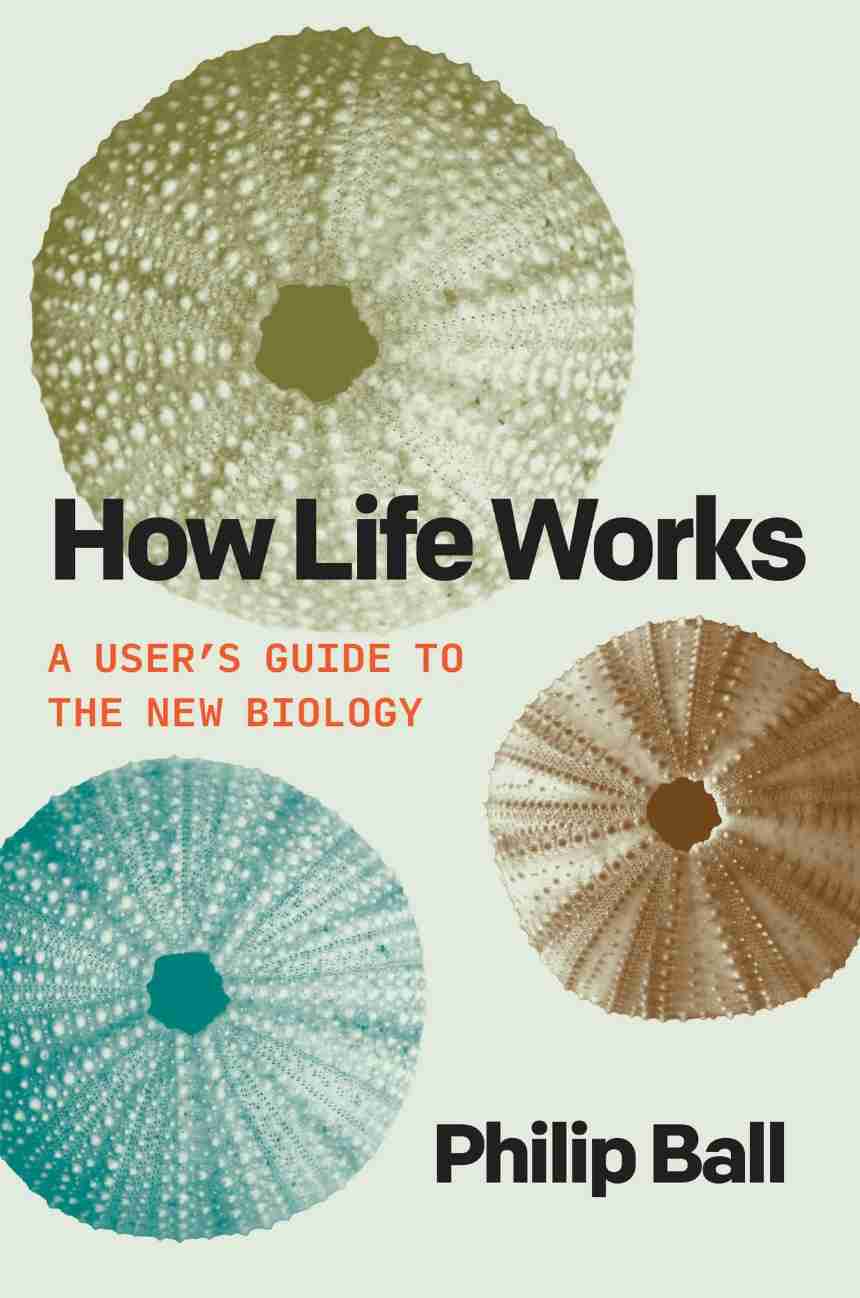
A cutting-edge new vision of biology that proposes to revise our concept of what life …
A dense, but fascinating book on a puzzling subject: how does life work. The author freely admits that he doesn't have the answer, and biologists are still working on the problem. But what he does say is that the 'gene-centric' view of life, sometimes pushed to ridiculous limits (i.e., "it is not my fault, my genes made me do it"), is incorrect and won't lead us to the answers as to how life works and what makes life so different from non-life.
Starting from the smallest details, the author shows that while DNA does store the information needed to produce proteins and RNA, it is very far from being the 'blueprint of life'. The Human Genome Project, covered by the author, may have decoded the genes that make us human, but it is still far from helping us to solve the problem of how to make a human from …
A dense, but fascinating book on a puzzling subject: how does life work. The author freely admits that he doesn't have the answer, and biologists are still working on the problem. But what he does say is that the 'gene-centric' view of life, sometimes pushed to ridiculous limits (i.e., "it is not my fault, my genes made me do it"), is incorrect and won't lead us to the answers as to how life works and what makes life so different from non-life.
Starting from the smallest details, the author shows that while DNA does store the information needed to produce proteins and RNA, it is very far from being the 'blueprint of life'. The Human Genome Project, covered by the author, may have decoded the genes that make us human, but it is still far from helping us to solve the problem of how to make a human from a single cell formed from a merger of an egg and sperm.
Instead, the author shows that the interplay of DNA, proteins and RNA at the cell, tissue and higher levels are what make life work, in the broadest details (once again, scientists are still working hard at puzzling out the details). DNA may help provide the information on how to make the proteins and RNA needed for life, but it is far from being able to dictate how to make a body. Proteins and RNA regulate and coordinate among themselves, at the cell level and higher, using the instructions provided by DNA (but sometimes ignoring it) to build the cells and tissues that make up a body (human or otherwise) as it develops and interacts with its environment.
An analogy provided by the author that I found illuminating is that of the development of cities. Cities get started in different ways and in different environments. Yet their overall structure (business and civic districts, transportation networks, housing) resembles each other. City administrations (the DNA) may roughly dictate the purpose and locations of areas, but it is the 'people on the ground' (the proteins and RNA that do development) that decide what actually gets built depending on the material and environment available.
In the same way, DNA may provide instructions for creating proteins and RNA required to create cells and regulate them, but it is the cells and, at a higher level, the tissues, that determine how the body gets built, based on the environment the body finds itself it. For this reason, searches for a 'gene that does X' mostly fail because what does X is dictated at the level of the cell and tissue, not by the gene.
Throughout the book, the author shows time and again how little genes actually determine things. A recent prime example is COVID-19. Despite knowing the intimate structure of how the virus invades a cell, the huge number of possible results (from people 'just' having colds to suffering from Long COVID or other disabilities) shows that it is the body's reaction to the virus, not the DNA in our bodies, that determines how sick we can become.
Another subject the author touches on is, of course, human sexuality. And here, he shows why those that say that genes (the X and Y chromosomes) determine our sexual orientation are out of touch with reality, with the various ways bodies and cells can develop to have male or female characteristics, despite the instructions that the genes are providing that say otherwise.
An entertaining book that needs time for the information to sink it. And one that probably needs to be read sooner rather than later, but it is quite possible that some of the details in the book may prove to be wrong, as new ways to look at how life works get discovered by future developments in biology. But overall, a good overview on what modern biology has to say, for now, about how life works.
In this issue: stories by Daniel Bennett, Cécile Cristofari, Rachael Cupp, Jennifer R. Donohue, Paul …
A better than average issue of Interzone, with interesting stories by Paul E. Franz, James Sallis and Cécile Cristofari.
"Drink The Kombucha!" by Daniel Bennett: a home-made kombucha brew gives the brewer an urge to go out and pass the drink on to others. It is only later does he realize there may be a reason for the urge.
"The Baby Spoon" by Ivy Grimes: a young man is mysteriously asked to investigate the murder of a former schoolmate whom he barely knows. The discovery of a personal baby spoon near the scene of the crime would lead to a sequence of events that might unconsciously connect him to the murder.
"Lights of the New World" by Paul E. Franz: in a future where an unknown event caused most of the population of the world to die, a small farming community …
A better than average issue of Interzone, with interesting stories by Paul E. Franz, James Sallis and Cécile Cristofari.
"Drink The Kombucha!" by Daniel Bennett: a home-made kombucha brew gives the brewer an urge to go out and pass the drink on to others. It is only later does he realize there may be a reason for the urge.
"The Baby Spoon" by Ivy Grimes: a young man is mysteriously asked to investigate the murder of a former schoolmate whom he barely knows. The discovery of a personal baby spoon near the scene of the crime would lead to a sequence of events that might unconsciously connect him to the murder.
"Lights of the New World" by Paul E. Franz: in a future where an unknown event caused most of the population of the world to die, a small farming community attempts to keep on living. In a parallel tale, a person from the community leaves on a journey to discover what has happened to the rest of the world and learn what caused the disaster, which may be linked to her late grandfather, a researcher in nanotechnology for healing people.
"Are You a Bad Girl? (Cosmo Quiz, November 1982)" by Rachael Cupp: a series of essays written by a girl who wonders whether she is 'bad' for having thoughts about boys, kissing and sex as she huddles in a bomb shelter.
"Escobar Medina Plays God" by Dante Luiz: a story told in a series of interviews and social media posts about a person and woman who decide to have a child created and grown in a way that makes people of the uncomfortable.
"In the Pines" by Jennifer R. Donohue: a fascinating fantasy tale of a young girl who goes out into the world to find her lost mother. But she has to beware of the pine trees in a forest, who may have other plans for them as they travel through it to get back home.
"Settlers" by James Sallis: a story of a man who lives through a time when nation states have collapsed due to mistrusts among its citizens, leaving people to create and manage their own affairs. But even then, coups and insurgencies still occur among the many smaller states that emerge.
"Wesley Not-There" by Tim Major: a waitress discovers that food going missing. When she investigates, she discovers a person who is not-there. She attempts to befriend the person, but her efforts may not have the effect she hopes.
"Breathe Me a Breeze, Paint Me a Sea" by Cécile Cristofari: in a café, a mother encounters a former inmate with intricate tattoos. An old man then tells her the story of the inmate who created the tattoos while incarcerated in an attempt to escape his prison, which leads to the disturbing idea that perhaps she herself is part of his artwork.
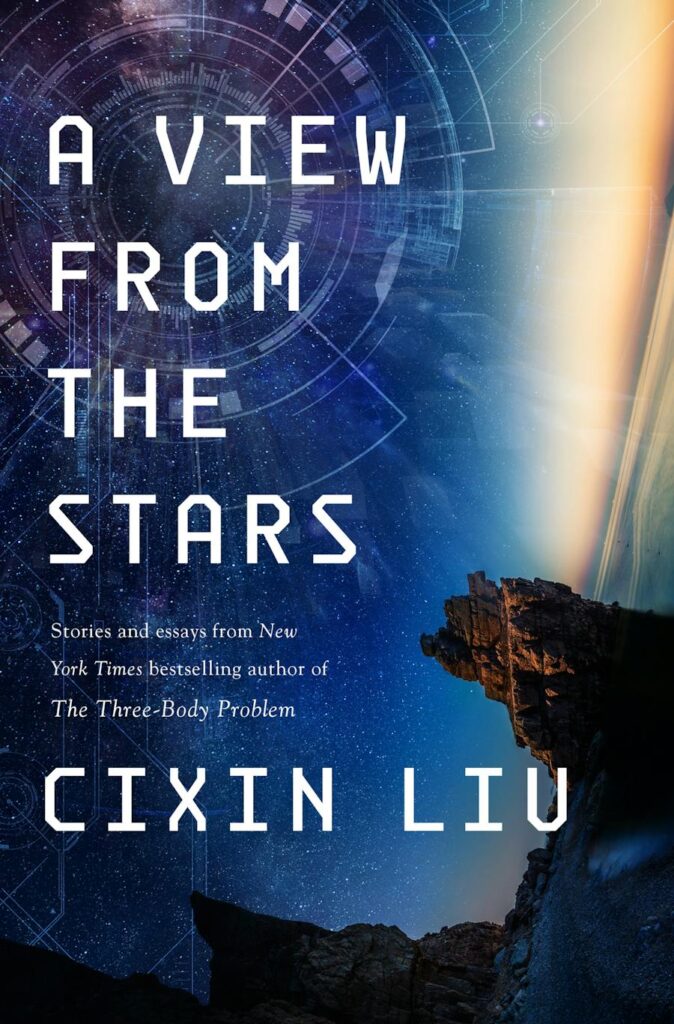
A VIEW FROM THE STARS features a range of short works from the past three …
Book excerpt available at [ www.torforgeblog.com/2024/01/25/excerpt-reveal-a-view-from-the-stars-by-cixin-liu/ ]

Sue Lynn Tan’s highly acclaimed, bestselling Celestial Kingdom duology is expanded with this new compilation …
An excerpt from the book available at [ reactormag.com/read-an-excerpt-from-sue-lynn-tans-tales-of-the-celestial-kingdom/ ].

Fiction: - "Nothing of Value" by Aimee Ogden - "Down the Waterfall" by Cécile Cristofari …
An interesting issue with good stories by Cécile Cristofari, Alexandra Munck, Chi Hui and E.N. Auslender.
"Nothing of Value" by Aimee Ogden: in a future when people travel to worlds by beaming information about themselves to be recreated at the destination, one person goes to Mars to meet her former lover during student times. But times have changed, and the meeting does not go well. But forgetting the meeting may just be one transport away.
"Down the Waterfall" by Cécile Cristofari: a woman discovers the secret of time travel and uses it to try to get back to a certain day, when she missed the poetry recital of a beloved friend, for a special reason.
"Binomial Nomenclature and the Mother of Happiness" by Alexandra Munck: in an alternate Earth, two moons made of virtually invisible 'sonder matter' are discovered. One researcher …
An interesting issue with good stories by Cécile Cristofari, Alexandra Munck, Chi Hui and E.N. Auslender.
"Nothing of Value" by Aimee Ogden: in a future when people travel to worlds by beaming information about themselves to be recreated at the destination, one person goes to Mars to meet her former lover during student times. But times have changed, and the meeting does not go well. But forgetting the meeting may just be one transport away.
"Down the Waterfall" by Cécile Cristofari: a woman discovers the secret of time travel and uses it to try to get back to a certain day, when she missed the poetry recital of a beloved friend, for a special reason.
"Binomial Nomenclature and the Mother of Happiness" by Alexandra Munck: in an alternate Earth, two moons made of virtually invisible 'sonder matter' are discovered. One researcher designs virtual glasses that can see the matter, and discovers it all around people and emanating from them. Further investigations reveal different shapes being emitted by people with different emotional moods. This may turn out to be a way to discover the reason a talking elephant attempts a shocking act that, unusually, may be related to a particular Shakespeare play.
"Stars Don't Dream" by Chi Hui, translated by John Chu: an interesting story about individuals coming together to collectively launch an interesting mission in space, at a time when humanity have retreated into virtual environments. The individuals won't live to see the end of the mission, but the story shows what happens far, far in the future.
"Just Another Cat in a Box" by E.N. Auslender: a morbid story of a man who wakes up, knowing he has been created out of matter, into an unexpected world that has changed beyond recognition. What he discovers will be the reason for the world to be in that state, and what he must eventually do if a future version of him is to have a chance to, maybe, save the world.
"Rail Meat" by Marie Vibbert: a thief gatecrashes a party for the wealthy, hoping to steal some treasures. Instead, she meets a fellow thief. They start a relationship while planning a heist of a wealthy yacht racer; but only if they can work to get the racer to win, in a yacht race at the edge of space, where one of them may have to make a leap of faith to achieve victory.
"You Dream of the Hive" by C. M. Fields: a woman is 'pulled' out of a Hive Mind and sent for rehabilitation. But she only yearns to rejoin the Hive, and may have the means to do so via an implant which is yet to be removed.
"You Cannot Grow in Salted Earth" by Priya Chand: a person makes a journey to a distant world, only to return home, for there are no more worlds that could be claimed.

From phishing scams to Ponzi schemes, fraudulent science to fake art, chess cheaters to crypto …
A fascinating book that looks at why people often fall for tricks and scams that, usually on hindsight, appear so obvious. As the authors explain, it is due to our natural tendency to believe what we see or accept what we have being told as the truth. What this book does is show how scammers take advantage of this tendency, and also try to equip the reader with the necessary ways to look closer or dig deeper for more information to reveal the scam.
The book is divided into two parts. The first part covers the habits we use that make us fall for scams. These habits are:
focusing too much on what is being presented. This leads us to exclude or ignore other information that would reveal the scam. A prime example is survivorship bias, where we only have information on those who make it …
A fascinating book that looks at why people often fall for tricks and scams that, usually on hindsight, appear so obvious. As the authors explain, it is due to our natural tendency to believe what we see or accept what we have being told as the truth. What this book does is show how scammers take advantage of this tendency, and also try to equip the reader with the necessary ways to look closer or dig deeper for more information to reveal the scam.
The book is divided into two parts. The first part covers the habits we use that make us fall for scams. These habits are:
focusing too much on what is being presented. This leads us to exclude or ignore other information that would reveal the scam. A prime example is survivorship bias, where we only have information on those who make it (how to be a non-graduate billionaire), but not on those who don't (excluding the experience of numerous non-graduates that never go on to become billionaires).
predictions that follow our expectations, leading us to not scrutinize the actual results, leading to researchers to falsify data so that the results are what are expected for the study to fulfil their research grants or get better positions on the strength of the studies.
being committed to our version of events, leading us to discount evidence that contradicts it. This could lead to false memories of events and belief in conspiracy theories because reality doesn't match the false memory. We also become more critical only of views that don't match our expectations.
efficiency is the tendency for us to accept things at face value, rather than trying to look for more information to back up the views, like accepting that some people may be good at chess or exams without realizing they may be cheating. If we are already committed to a course of action, even if it is a scam, we may find it hard to back out, because the 'sunk costs' makes it more efficient to continue the course of action.
The second part looks at the hooks scammers use to make us believe whatever is being presented.
consistent data that makes us believe that something must be correct (because it is consistent). Only, in real life, there is always noise in data, so data that is too consistent should be considered suspicious.
familiarity with the way things are advertised allows scammers to present something that looks familiar but is actually a scam: fake websites that look similar to actual bank websites, for example.
precision makes us think the results must be true because the results are so precise. Perhaps too precise: studies that present impossibly precise results should be suspect, as the data cannot back up the precision.
the potency of a social intervention to make us believe it must be valid since it has such a huge effect. Again, the data may show that this potency was exaggerated or only done on a small scale and thus, may not be valid for the general population.
The authors also present ways to see through the scams, from asking for more data, asking the right questions or looking at the scam presentations in a new way that would reveal the contradictions or missing information that would show that what is being shown is not the truth.

A genre-defining--and redefining--collection of fiction's boldest, most rebellious, and most prescient genre, featuring a smorgasbord …
Note: This is a summary, as a review of each of the stories may be too long for BookWyrm to hold. The full review can be read at my website [ sohkamyung.github.io/reviews/fiction/2023/20231212-BigBookCyberpunk.html ].
A fabulous anthology of stories centred around the genre of Cyberpunk, as seen by the editor. The stories here centre around technology and its possible effects on people and society and range in style from contemporary to the more ‘punkish’ which involve a lot of cyber-slang, sometimes to the point where I have trouble understanding the story.
The book is divided into several sections, each with stories related to that section. It starts with a story that the editor considers the precursor to the kind of cyberpunk stories in that section. And the book starts with a story the editor considers a precursor to the whole field of cyberpunk.
With such a huge anthology, …
Note: This is a summary, as a review of each of the stories may be too long for BookWyrm to hold. The full review can be read at my website [ sohkamyung.github.io/reviews/fiction/2023/20231212-BigBookCyberpunk.html ].
A fabulous anthology of stories centred around the genre of Cyberpunk, as seen by the editor. The stories here centre around technology and its possible effects on people and society and range in style from contemporary to the more ‘punkish’ which involve a lot of cyber-slang, sometimes to the point where I have trouble understanding the story.
The book is divided into several sections, each with stories related to that section. It starts with a story that the editor considers the precursor to the kind of cyberpunk stories in that section. And the book starts with a story the editor considers a precursor to the whole field of cyberpunk.
With such a huge anthology, it would not be possible for the reader to enjoy every story, but I personally found myself enjoying most of them, and seeing the kinds of speculations that the field of cyberpunk has (and still is) contributing to contemporary speculative fiction.

Fiction: - "Morag's Boy" by Fiona Moore - "Thirteen Ways of Looking at a Cyborg" …
A better than average issue, with interesting stories by Fiona Moore, Ng Yi-Sheng and Fu Qiang.
"Morag's Boy" by Fiona Moore: a follow-up to the author's earlier story, this one has a boy sent to a farm. What he learns there, along with his skills in fixing machines, would send him on a journey of invention, in a world where technology and civilization has partially collapsed, and people are still picking up (and repairing) the left-over machines.
"Thirteen Ways of Looking at a Cyborg" by Samara Auman: a story told from the viewpoint of an intelligent crow who, at the start of the story, finds its favourite human cyborg dead. As the story develops, we learn more about where the crows come from, their relationship with the dead person and what the crows will do in memory of her.
"In Memories …
A better than average issue, with interesting stories by Fiona Moore, Ng Yi-Sheng and Fu Qiang.
"Morag's Boy" by Fiona Moore: a follow-up to the author's earlier story, this one has a boy sent to a farm. What he learns there, along with his skills in fixing machines, would send him on a journey of invention, in a world where technology and civilization has partially collapsed, and people are still picking up (and repairing) the left-over machines.
"Thirteen Ways of Looking at a Cyborg" by Samara Auman: a story told from the viewpoint of an intelligent crow who, at the start of the story, finds its favourite human cyborg dead. As the story develops, we learn more about where the crows come from, their relationship with the dead person and what the crows will do in memory of her.
"In Memories We Drown" by Kelsea Yu: in a deep underwater lab cut off from the surface after an unknown disaster hits, one person tastes a marine plant and discovers that it can surface vivid memories of her favourite food. But this may turn out to be a curse when the plant also surfaces vivid memories of her loved ones, now maybe lost to her.
"Waffles Are Only Goodbye for Now" by Ryan Cole: an intelligent fridge lies buried in a house during a conflict and gets a visit from a refugee looking for food. Time passes, and they develop a relationship. But it may soon end when the refugee has to move on, unless the fridge is willing to give up on memories of its beloved owners.
"The World's Wife" by Ng Yi-Sheng: in a sequence of unlikely events, the corpse of a person in space has become the home planet for intelligent bacteria. But now the bacteria want revenge over an accidental act unknowingly caused by the person's wife.
"The Last Gamemaster in the World" by Angela Liu: in a future where people are hooked up to virtual reality, the person in charge visits his mother to talk to her before going back to his job. For while everybody is enjoying the game, somebody has to stay outside to watch over everybody else.
"Kill That Groundhog" by Fu Qiang, translated by Andy Dudak: three people sit down in a cafe, not for the first time, to discover why they are stuck in reliving one particular day. They try various schemes to break out of the day and eventually hit on a plan that may do it. But it may not end the way they planned it.
"Eight or Die (Part 2)" by Thoraiya Dyer: the second part of the story where aliens recruit a human to help them capture a criminal that may be planning genocide. The human has now fit into an alien society and after going on a dangerous mining operation, he is now on the way to a deadly island filled with mechanical killers where the criminal is hiding.

A series of five tales, told by a synthetic narrator, centuries after humans have died …
A set of short fiction, set in a time in a far future where humans have become mythical in a world populated by mechanical beings. The beings are 'haunted' by the idea that humans might have had children and, via the workings of a 'god', set out to recreate children, as well as tell stories (disturbing stories) about how children might come into being or how humans might have treated children.
A set of short fiction, set in a time in a far future where humans have become mythical in a world populated by mechanical beings. The beings are 'haunted' by the idea that humans might have had children and, via the workings of a 'god', set out to recreate children, as well as tell stories (disturbing stories) about how children might come into being or how humans might have treated children.
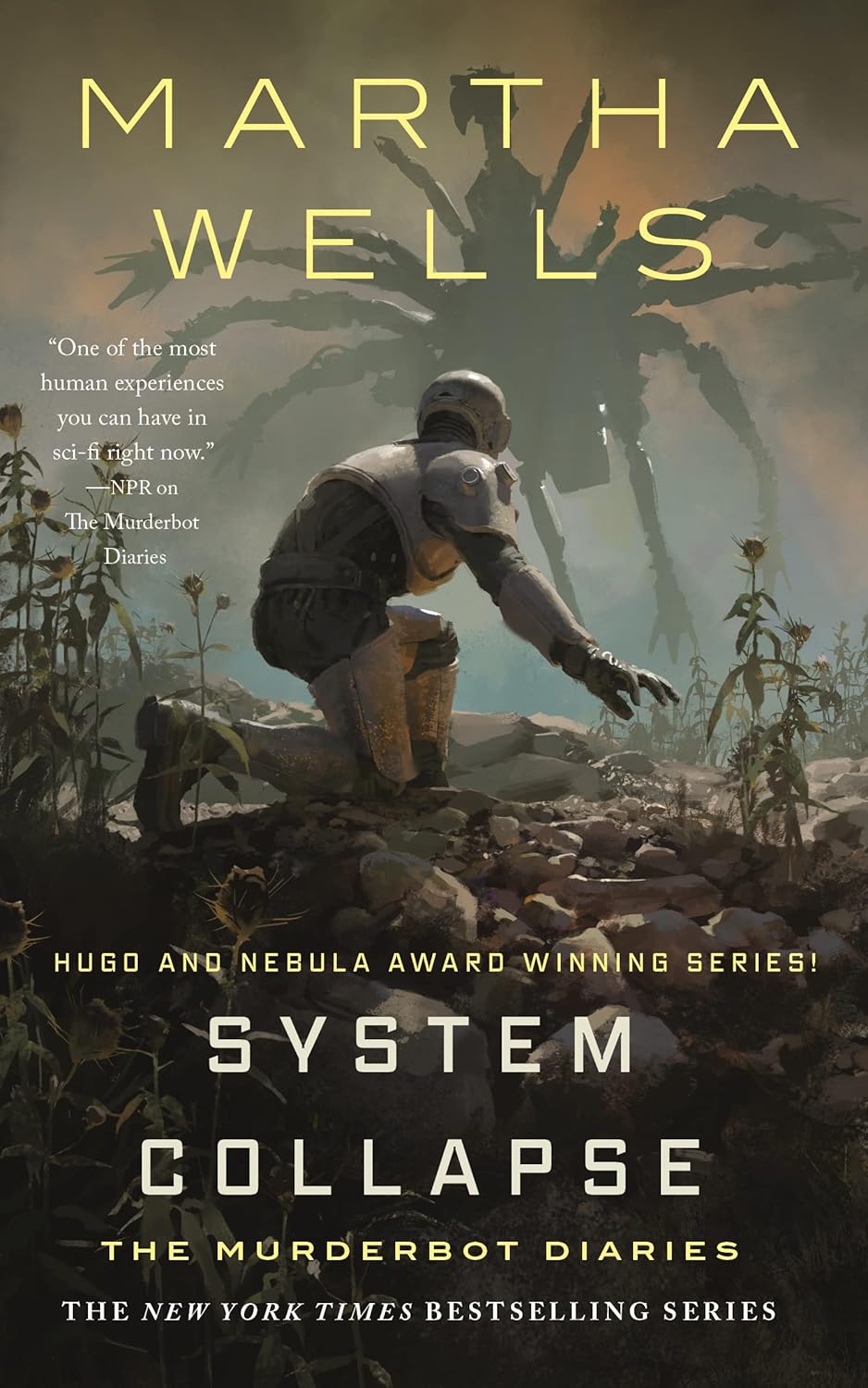
Am I making it worse? I think I'm making it worse.
Following the events …
An enjoyable episode in the Murderbot Diaries, this one continues from where "Network Effect" left off, with a colony left on a world contaminated with alien material that can infect both humans and AI and constructs. In the book, Murderbot and its friends continue to talk to the colonists, hoping to convince them that life with the corporation that is coming to claim their planet is not good (think bonded slavery). Then they learn that there was another colony established and now their job just got twice as tough (or harder).
As if this wasn't enough, Murderbot is suffering from a personal "redacted" problem that is affecting his efficiency. It is only later in this story that the nature of the "redacted" problem becomes clear, and it is something that can also affect humans, which makes Murderbot feel more human (ugh).
The first half of the book is …
An enjoyable episode in the Murderbot Diaries, this one continues from where "Network Effect" left off, with a colony left on a world contaminated with alien material that can infect both humans and AI and constructs. In the book, Murderbot and its friends continue to talk to the colonists, hoping to convince them that life with the corporation that is coming to claim their planet is not good (think bonded slavery). Then they learn that there was another colony established and now their job just got twice as tough (or harder).
As if this wasn't enough, Murderbot is suffering from a personal "redacted" problem that is affecting his efficiency. It is only later in this story that the nature of the "redacted" problem becomes clear, and it is something that can also affect humans, which makes Murderbot feel more human (ugh).
The first half of the book is more about subterfuge, as the team try to make contact with the other group of colonists without alerting the corporation. But it may be all for nothing, when the corporation misleads the colonist over what Murderbot's group wants to do. Now, Murderbot reveals what "redacted" is, how it is affecting him and also what he and the group must do to win back the colonist. This, of course, leads to a pitched battle that Murderbot must fight in its own way to win.
Murderbot has also learned that in some ways, it is like the humans he wants to protect. And by the end, who knows where Murderbot and its best friend, ART, will now end up doing.
