nerd teacher [books] rated Norse Mythology: 4 stars

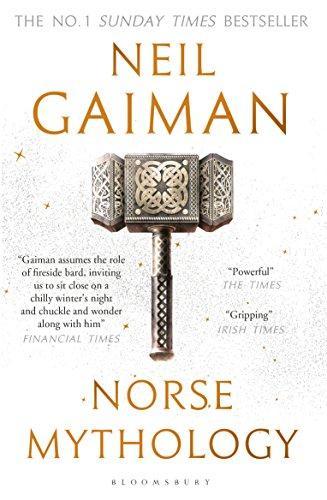
Norse Mythology by Neil Gaiman
The great Norse myths, which have inspired so much of modern fiction, are dazzlingly retold by Neil Gaiman. Tales of …
Exhausted anarchist and school abolitionist who can be found at nerdteacher.com where I muse about school and education-related things, and all my links are here. My non-book posts are mostly at @whatanerd@treehouse.systems, occasionally I hide on @whatanerd@eldritch.cafe, or you can email me at n@nerdteacher.com. [they/them]
I was a secondary literature and humanities teacher who has swapped to being a tutor, so it's best to expect a ridiculously huge range of books.
And yes, I do spend a lot of time making sure book entries are as complete as I can make them. Please send help.
This link opens in a pop-up window

The great Norse myths, which have inspired so much of modern fiction, are dazzlingly retold by Neil Gaiman. Tales of …
Content warning Long review: Mentions of views that exclude and misrepresent sex workers.
I started reading this book before Atwood decided to publicly pull a Rowling, acting as if the word woman "could no longer be used" because of some transphobic nonsense.
But even before she did that, had I read and finished this book without that context, a lot of conservative views would've been present that I wouldn't have expected based on her older work that I've read.
This book has a lot of in-text slut-shaming, and a lot of it feels like a lot of it is based in frustration of promiscuous women, sex workers, and anyone else who uses sex (or the imagery of sex) for their work. Despite the initial complaint at the beginning that Penelope has been "used to beat other women" into being good and loyal wives (as a sort of "double standard"), Atwood writes a Penelope who maintains a disdain for people who (according to the writing) choose to engage in behaviours that make them more desirable to others.
There's a clear delineation between the "sympathy" (which is questionably written, at best) for the 12 maids who were murdered by Odysseus and Telemachus because their actions were initially about self-preservation (of Penelope and thus themselves) and how Atwood's Penelope views Helen of Troy (who has zero sympathy and rarely ever has a scene that isn't hostile towards her). Atwood writes sympathy for their sexuality because so much of it came as a result of rape and forced prostitution. She portrays the maids in many of the same ways that people assume sex work looks like: trafficked. And the maids very much are because they're stated to be slaves, to have been purchased or stolen from their families, to have been "permissibly" raped by the masters who owned them... but the writing appears to connect their lives to those of sex workers today. Much of the same language exists here that exists in circles that exclude sex workers.
It's gross. It feels gross. This book would've been a big hint that... Atwood has a lot of exclusionary views that refuse to integrate the experience of certain people into her so-called "feminism."
There really needs to be a lot more queer texts, especially within anarchism. There were so many pieces that I didn't fully agree with (and that's fine), but it was worrying how often these pieces tended to err towards... other hegemonic values. Sometimes, I don't think they noticed they were doing it.
Some of the essays quoted... massively problematic people in trying to make their point, and I'm not keen on that. Revisiting it, I found an essay that openly cites an individual who has worked with organisations that support pederasts, and I just... don't get why? Like, it doesn't build their point, it doesn't add to it, and it does just... open up a lot of issues for queer folks. Why should we launder people who engage in harm against children into our spaces?
Sadly, more people need to really check through their sources and recognise who they are …
There really needs to be a lot more queer texts, especially within anarchism. There were so many pieces that I didn't fully agree with (and that's fine), but it was worrying how often these pieces tended to err towards... other hegemonic values. Sometimes, I don't think they noticed they were doing it.
Some of the essays quoted... massively problematic people in trying to make their point, and I'm not keen on that. Revisiting it, I found an essay that openly cites an individual who has worked with organisations that support pederasts, and I just... don't get why? Like, it doesn't build their point, it doesn't add to it, and it does just... open up a lot of issues for queer folks. Why should we launder people who engage in harm against children into our spaces?
Sadly, more people need to really check through their sources and recognise who they are and elaborate on them.
I love this book. A lot. It actually means quite a lot to me because it was one of the first places where I could see someone trying to think through some kind of anarchist community, what some of the problems could be, and just how we could possibly organise our entire lives differently.
I wish there were more books in this genre, and I would happily collect them all in order to promote them elsewhere. This is so sweet, and it's definitely great for young children.
The flow is a bit wonky in the poetry (personally), but it's still got a great message. (Though, I think there needs to be a little more focus on people fighting to stay in their home, since that's exactly what happens when people are squatting. I also think that this could show a stronger community message, which would improve it greatly.)
Moderately useful. Reads mostly like a stereotypical education blog where all the posts link back to Teachers Pay Teachers, and that's actually kind of annoying. The resources that the QR codes lead to are mostly... not helpful? They're impractical and infuriating, and a lot of it isn't really geared for any age group at all.
That isn't to say there isn't anything useful, but it didn't feel any different than blog posts I've found that try to sell me things.
In a lot of ways, I wish this was a more fleshed out novel. It's still great as a novella, but I wanted more.
I also did this with my high school creative writing class, and all of my students thought it was pretty good. A lot of my students got mad at me for not having them read the others, which I think is a good indicator of how enjoyable it is.
Content warning A small spoiler.
Yancey's world is intriguing, and I found it rather difficult to put the book down. This was a pleasant surprise, since I hadn't actually planned on reading it; I didn't buy it, but it arrived in my home because it was a gift for someone.
Regardless, it's a much more interesting take on alien-takeover stories. It's refreshing because it's different. Aliens look like humans because they're implanted in humans; aliens don't look like what humans thought aliens would look like. Instead of the typical "aliens swoop down from outer space and kill us all with their ray guns" or Independence Day-style fights, this is more focused on guerrilla warfare and viewing humans as a pest. Literally as a pest. Cockroaches and slugs.
It's compelling, and there are multiple points of view; you're not just getting one point of view.
The only problem is that his character base isn't very diverse. It's a bit white. Even the one person "coded" as Asian isn't explicitly stated as being Asian (Ringer). And the coding is really basic and hyper-stereotypical: Super smart, likes chess, is a princess, straight dark hair, light skin. There's nothing else about her that 'codes' her as Asian, so it you're not even aware that she is until Book #2 (sorry, spoiler).
Update: The biological imperative that I mention later in this review makes sense, particularly as she has recently published a personal essay that outlined transphobic views, and it's not the first time. I also find this critique of her interesting.
...
I don't have many issues with the overall theme. Feminism is a goal that we should all be working toward; strictly enforcing gender roles is something that we really need to stop doing. Those sentiments are something I can support and get behind.
I'm particularly drawn to the section about how we socialise girls (and people perceived to be girls) to work towards marriage, while we don't do the same to boys. For girls and femmes, we're taught to be likable and to seek a relationship (and that we've failed if we're not married by some magic age). We're seen as less respectable if we're unmarried, while men …
Update: The biological imperative that I mention later in this review makes sense, particularly as she has recently published a personal essay that outlined transphobic views, and it's not the first time. I also find this critique of her interesting.
...
I don't have many issues with the overall theme. Feminism is a goal that we should all be working toward; strictly enforcing gender roles is something that we really need to stop doing. Those sentiments are something I can support and get behind.
I'm particularly drawn to the section about how we socialise girls (and people perceived to be girls) to work towards marriage, while we don't do the same to boys. For girls and femmes, we're taught to be likable and to seek a relationship (and that we've failed if we're not married by some magic age). We're seen as less respectable if we're unmarried, while men are left alone and able to be bachelors for however long. They are not socialised to have the same regard for their romantic relationships that we are, which often feels like we're meant to please them in whatever way or try to minimise ourselves to not intimidate them. This is something that I feel all the time, and I've felt it for a variety of reasons (one of which is my bisexuality, which society seems to think precludes me from having a successful long-term relationship).
However, in reading this, there is one major point of interest that seeps into her conversations of feminism: biological imperatives.
First: she openly discusses things about how we lived in 'a world in which physical strength was the most important attribute for survival'. As someone who has studied anthropology, this is not something I have ever come across in actual evidence. When we look at ancient societies, starting with nomadic bands, it is not physical strength that was most important; it was our social skills (for taking care of children, elderly members, and individuals with disabilities -- we do have archaeological records for the latter, btw) and stamina/health (for traversing long-distances, which is necessary for the collection of foods via gathering/scavenging). "Physical strength," as she intends it, was not a requirement (but a benefit).
Our anthropological record notes that there is a shift in egalitarianism between perceived men/women that is related to (at the very least) permanent settlement and agriculture. I would, honestly, recommend a deeper archaeological/anthropological historical understanding before saying what our ancestors "required" for survival.
Second: One of the views that came out in an interview awhile back (for which she has "apologised", while also appearing to double down on the same transphobic views she was called out for) makes an appearance in this book: that of defining men and women by their genitals (and their ability to have children). This a deeply uncomfortable aspect for her to address in this fashion, as it lends itself quite well to TERFs (trans-exclusionary radical feminists). Whether she intends that or not, it does.