nerd teacher [books] rated A. D.: After Death: 2 stars

A. D.: After Death by Scott Snyder, Jeff Lemire (A.D.: After Death, #1)
"What if we found a cure for death? Years after the discovery of a genetic cure for mortality, one man …
Exhausted anarchist and school abolitionist who can be found at nerdteacher.com where I muse about school and education-related things, and all my links are here. My non-book posts are mostly at @whatanerd@treehouse.systems, occasionally I hide on @whatanerd@eldritch.cafe, or you can email me at n@nerdteacher.com. [they/them]
I was a secondary literature and humanities teacher who has swapped to being a tutor, so it's best to expect a ridiculously huge range of books.
And yes, I do spend a lot of time making sure book entries are as complete as I can make them. Please send help.
This link opens in a pop-up window
"What if we found a cure for death? Years after the discovery of a genetic cure for mortality, one man …

Based on the New York Times bestselling novel by Marie Lu, this graphic novel adaptation …
I haven't read the novel, though I might end up doing so later. However, this is a much better interpretation than many of the previous ones that went grim-dark and decided to be entirely right-wing in their interpretations.
It still has issues, like the perpetual annoyance of not knowing what an anarchist is (unless these are ancaps, who... aren't anarchist). The conflation is even more frustrating when the symbol that the Nightwalkers leave behind literally looks like a Bitcoin logo. Honestly, more people need to stop using anarchism, anarchists, and anarchy as bad guys and realise how much propaganda they've ingested.
This version of Bruce is, at least, a character. He has a personality beyond his parents, he has friendships. But he's still what he's always going to be: A billionaire philanthropist who chooses how to save the city.
I haven't read the novel, though I might end up doing so later. However, this is a much better interpretation than many of the previous ones that went grim-dark and decided to be entirely right-wing in their interpretations.
It still has issues, like the perpetual annoyance of not knowing what an anarchist is (unless these are ancaps, who... aren't anarchist). The conflation is even more frustrating when the symbol that the Nightwalkers leave behind literally looks like a Bitcoin logo. Honestly, more people need to stop using anarchism, anarchists, and anarchy as bad guys and realise how much propaganda they've ingested.
This version of Bruce is, at least, a character. He has a personality beyond his parents, he has friendships. But he's still what he's always going to be: A billionaire philanthropist who chooses how to save the city.
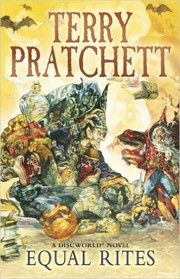
The last thing the wizard Drum Billet did, before Death laid a bony hand on …
I always adore stories of this nature, particularly because I love to see the kinds of journeys that take place among the characters and how that develops them.
While I know Esk was meant to be the primary main character, Granny Weatherwax really takes on a whole chunk of the story. She's someone with whom I very much find myself identifying, and it's because of the constant "Well, it's got to happen one way or the other, so we may as well do it" personality she exudes. She's very stubborn but incredibly caring for the people around her, even if it seems otherwise.
Also, she has a thing for old fabric.
I always adore stories of this nature, particularly because I love to see the kinds of journeys that take place among the characters and how that develops them.
While I know Esk was meant to be the primary main character, Granny Weatherwax really takes on a whole chunk of the story. She's someone with whom I very much find myself identifying, and it's because of the constant "Well, it's got to happen one way or the other, so we may as well do it" personality she exudes. She's very stubborn but incredibly caring for the people around her, even if it seems otherwise.
Also, she has a thing for old fabric.

The renowned activist and public intellectual David Graeber teams up with the professor of comparative …
This book suffers from two things in terms of its writing and structure. First, there's Graeber's desire to compress as much information into one space as humanly possible, even to the detriment of his own argument and the discussion he wants to push people to have. The second is that it seems, if I'm reading into both authors' writing styles correctly, Wengrow's desire to flesh out those concepts with more detail to further support them. (I say that because I've checked a few of his articles, and he has a tendency to develop even more focused detail than Graeber.)
I could be wrong about who was doing what, but regardless? The end result is a book that is a slog to get through and frequently leaves me forgetting half of what I've read, going back to skim it and remind myself about what they were discussing, and then trying …
This book suffers from two things in terms of its writing and structure. First, there's Graeber's desire to compress as much information into one space as humanly possible, even to the detriment of his own argument and the discussion he wants to push people to have. The second is that it seems, if I'm reading into both authors' writing styles correctly, Wengrow's desire to flesh out those concepts with more detail to further support them. (I say that because I've checked a few of his articles, and he has a tendency to develop even more focused detail than Graeber.)
I could be wrong about who was doing what, but regardless? The end result is a book that is a slog to get through and frequently leaves me forgetting half of what I've read, going back to skim it and remind myself about what they were discussing, and then trying to figure out what most of it has to do with the point being made. Which, yeah, the topics discussed do relate. But it's such a winding detour through excruciating detail that it makes it hard to focus on the overall picture that they're trying to get us to see.
So much of this would've benefitted from focused case studies rather than intertwining and switching between each of them. It also would've dealt better with more clear (instead of verbose and annoyingly lengthy) section titles that could serve as functional reminders rather than quippy sayings.
Overwhelmingly, I wasn't amused with most of this. Despite the obvious amount of time this had to have taken in order to gather all the resources and research, the writing feels rushed and confused. It doesn't feel nearly as solid as it really could've been.

Every day, we're bombarded with pressure to be positive. From 'good vibes only' and 'life …
For a book that is touted as a "powerful guide," it's written in the same fluffy self-help style of other books it's likely to be surrounded by. It's not awful, but it's just painfully obvious.
Which, I guess if that's what you need someone to recognise with regards to toxic positivity, it's fine. But for someone who is already very much in agreement with the harms of toxic positivity and has seen and experienced the ways in which it impacts your own marginalised identities? It's like having someone telling you things you already know.
There's not a lot of information; it is definitely more focused on reflections of different elements of toxic positivity. I was expecting it to be one part guide book and one part history (or at least some obvious integration of studies). Though there are notes with references at the back, it's also not clear …
For a book that is touted as a "powerful guide," it's written in the same fluffy self-help style of other books it's likely to be surrounded by. It's not awful, but it's just painfully obvious.
Which, I guess if that's what you need someone to recognise with regards to toxic positivity, it's fine. But for someone who is already very much in agreement with the harms of toxic positivity and has seen and experienced the ways in which it impacts your own marginalised identities? It's like having someone telling you things you already know.
There's not a lot of information; it is definitely more focused on reflections of different elements of toxic positivity. I was expecting it to be one part guide book and one part history (or at least some obvious integration of studies). Though there are notes with references at the back, it's also not clear while reading the chapters themselves. You have to piece them back together yourself, and it's kind of nonsensical.

Presents advice on the basic elements of narrative prose, covering point of view, sentence length and complex syntax, indirect narration, …

A powerful investigative look at data-based discrimination—and how technology affects civil and human rights and …
A lot of what was written here is unsurprising, especially if you've had to deal with any level of bureaucracy or public services. It's becoming clearer that we're under constant surveillance, and that it's especially true of anyone who needs public services. It goes into depth into a handful of services, creating case studies out of each one to highlight the elements that we should be both aware and cautious of.
Though the book focuses on the US, a lot of the lessons can be translated to places like Europe. These processes, though Europe does have more of a movement around "the right to be forgotten" and the inclusion of the GDPR (which generally seems to be... superficial, at best), are still in existence here. They are used against some of the most vulnerable people: the Romani, poor, asylum-seekers/refugees, immigrants.
A lot of what was written here is unsurprising, especially if you've had to deal with any level of bureaucracy or public services. It's becoming clearer that we're under constant surveillance, and that it's especially true of anyone who needs public services. It goes into depth into a handful of services, creating case studies out of each one to highlight the elements that we should be both aware and cautious of.
Though the book focuses on the US, a lot of the lessons can be translated to places like Europe. These processes, though Europe does have more of a movement around "the right to be forgotten" and the inclusion of the GDPR (which generally seems to be... superficial, at best), are still in existence here. They are used against some of the most vulnerable people: the Romani, poor, asylum-seekers/refugees, immigrants.
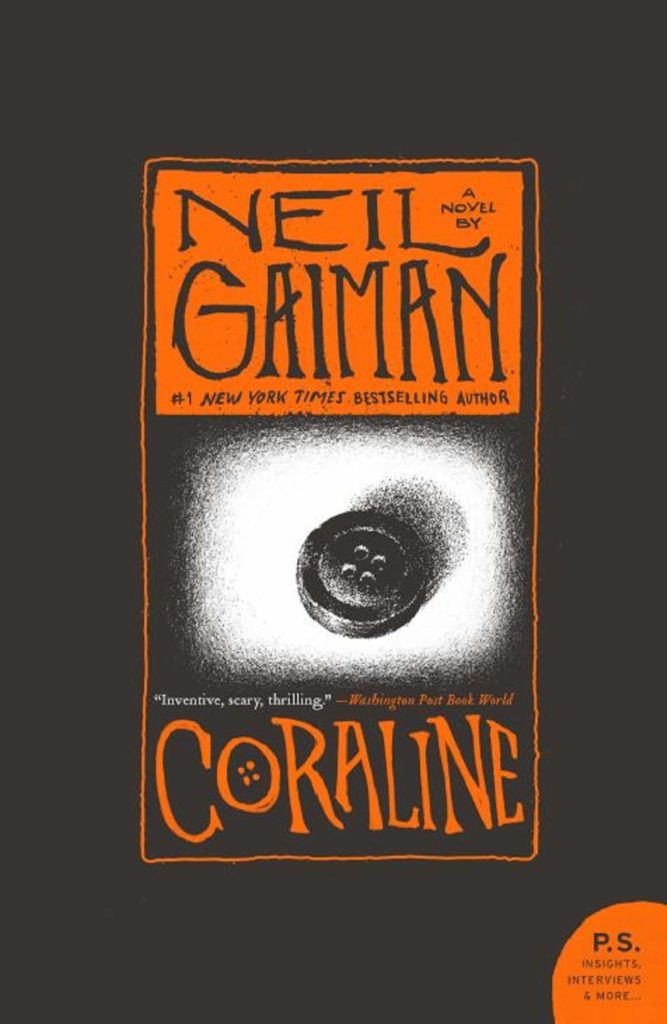
When Coraline steps through a door to find another house strangely similar to her own (only better), things seem marvelous.
…
Hidden for years, the mysterious Court of Owls surfaces in Gotham City--what must Batman do to defeat them, and what …

Gotham City's worst criminals--Joker, Riddler, Ra's al Ghul, Clayface and others--have emerged to throw Batman's …
The story can be interesting, but this book is far too difficult to read. There was zero consideration for any person with a reading disability in the use of colours on the textboxes. It's way too much of a struggle to even read all the blue narrative boxes and black text.
The story can be interesting, but this book is far too difficult to read. There was zero consideration for any person with a reading disability in the use of colours on the textboxes. It's way too much of a struggle to even read all the blue narrative boxes and black text.

Using an impressive array of material from literature, archaeology and social theory, Edward Said explores the profound implications of Freud’s …

A collection of Batman comics, originally published in thirteen monthly installments, following the efforts of …
Feels like a tedious nostalgia trip, where not much of the story feels cohesive. The twist at the end is kind of nonsensical, if anything.

"Together with inker Klaus Janson and colorist Lynn Varley, writer/artist Frank Miller completely reinvents the …
Frank Miller is not someone who I like, and I honestly think he's done more to harm visual storytelling media than... not. I don't think he's set out to do so (it's not like he can be blamed for being an influence on others), but the grim-dark method of storytelling with excessive panels and small details and a lot of text... It's a very confusing comic book to look at, and it's just... hideous. Very little pops out, many of the elements are hard to follow, and everything has a feeling of sameness. This is especially bizarre when they do try to include bright pops of colour, since it still manages to feel incredibly similar to everything else. It's... not great.
This also doesn't help when there are a lot of perspective shifts. The sameness actually makes it harder to follow than anything else.
The story itself is …
Frank Miller is not someone who I like, and I honestly think he's done more to harm visual storytelling media than... not. I don't think he's set out to do so (it's not like he can be blamed for being an influence on others), but the grim-dark method of storytelling with excessive panels and small details and a lot of text... It's a very confusing comic book to look at, and it's just... hideous. Very little pops out, many of the elements are hard to follow, and everything has a feeling of sameness. This is especially bizarre when they do try to include bright pops of colour, since it still manages to feel incredibly similar to everything else. It's... not great.
This also doesn't help when there are a lot of perspective shifts. The sameness actually makes it harder to follow than anything else.
The story itself is also... awful. While violence doesn't innately bother me in storytelling (it's something that can be discussed within narratives), the ways violence is portrayed often come off as being... about gratification. And it's regardless of who is doing it. I also find the perception of "excessive violence" as being "more adult" a bit absurd. If anything, excessive and gratuitous violence is something that I'd stop and question as an editor of a story. What is the point of it? How does it drive the narrative or character development? Does it actually harm the story?
But Frank Miller has been known for his... I'd charitably say questionable decisions and statements on these series. And I'm not a fan of those, either. This whole thing isn't gritty; it's needless and infuriating.

The Women Incendiaries tells the often overlooked story of the crucial role played by women …
So many bits and pieces of this book are things that could be written about today, from the author's jabs at many male historians for overlooking the roles of women within movements or considering feminism as unnecessary to some of the quotes taken from the women of the Commune and their frustrations within activism and movement spaces.
It's not surprising, but it is frustrating.
Overwhelmingly, this was a good read. It focused on a history that, even among anarchists, is rarely focused on (the Paris Commune and Louise Michel may be used frequently as a symbol, but it is rarely talked about what actually happened -- the events are glossed over). But it's intriguing because it incorporates a range of nuance for the many different women it sheds light on.
So many bits and pieces of this book are things that could be written about today, from the author's jabs at many male historians for overlooking the roles of women within movements or considering feminism as unnecessary to some of the quotes taken from the women of the Commune and their frustrations within activism and movement spaces.
It's not surprising, but it is frustrating.
Overwhelmingly, this was a good read. It focused on a history that, even among anarchists, is rarely focused on (the Paris Commune and Louise Michel may be used frequently as a symbol, but it is rarely talked about what actually happened -- the events are glossed over). But it's intriguing because it incorporates a range of nuance for the many different women it sheds light on.

I generally really like narratives that are driven by characters, where the focus is primarily on the characters themselves and how one little thing can upend their whole lives... but this book so, so dull.
Also, I wanted to like it because the concept is interesting (a kidnapped child who is unaware that they were kidnapped as a toddler and discovers it because of one small constant "Missing Person" reminder? Intriguing).
Part of the problem is that, as with many books where the characters are teenagers, the author has seemingly forgotten who teenagers are and how to relate to them. And while I'm quite aware that teenagers are prone to being silly and doing goofy things (as everyone is prone to being), a lot of the moments felt distinctly like the ways that adults view teenagers rather than the ways that teenagers actually are. The conversations felt stilted …
I generally really like narratives that are driven by characters, where the focus is primarily on the characters themselves and how one little thing can upend their whole lives... but this book so, so dull.
Also, I wanted to like it because the concept is interesting (a kidnapped child who is unaware that they were kidnapped as a toddler and discovers it because of one small constant "Missing Person" reminder? Intriguing).
Part of the problem is that, as with many books where the characters are teenagers, the author has seemingly forgotten who teenagers are and how to relate to them. And while I'm quite aware that teenagers are prone to being silly and doing goofy things (as everyone is prone to being), a lot of the moments felt distinctly like the ways that adults view teenagers rather than the ways that teenagers actually are. The conversations felt stilted and fake, the relationship structure felt fake... It just... nothing felt genuine.
If anything, I'd attribute that to this book really needing to be... a novella, at most. Definitely a short story. The character focus felt less like something the author wanted to do and more like a way to build up fluff, the way a person would do for an essay that has a wordcount they can't meet.