Exploring one universe at a time.
Interested in #Nature, #Photography, #NaturePhotography, #Science, #ScienceFiction, #Physics, #Engineering.
I have locked this account. If you would like to follow me, please fill in your Mastodon bio and post at least one toot (a simple introductory toot will do), so I have an idea who you are and that you are a real person, not a robot or a spam account.
Presents a graphic novel adaptation of the famous novel, in which a unicorn, alone in …
Nice graphic novel version of the book.
4 stars
A nicely done graphic novel version of the book by Peter S. Beagle. The story of a unicorn, who discovers that it is the last one in the world and goes on a search for the rest of the unicorns, is quite well known in fantasy circles. The illustrations here help the reader to visualize the world the unicorn lives in.
The end of the book includes interviews with Peter S. Beagle about the influence the book has had, as well as with the artist who illustrated the book.
A lower than average issue, with not much SF to the stories. The final two stories by Malcolm Devlin and Leo Vladimirsky goes some way to saving the issue.
"The Fate of the World, Reduced to a Ten-Second Pissing Contest" by Erica L. Satifka: aliens that almost look like us face off with humans in a bar removed from the earth. That's it.
"Looking for Landau" by Steven J. Dines: a horror/fantasy piece about a hunt for a person or entity who leaves agonizing phantoms in its wake. When the pursuer finally catches up, it may be the journey rather than the destination that matters the most.
"The Mark" by Abi Hynes: a person, burdened with a personal guilt, leaves the community to attempt to die alone, far away. As the journey proceeds, the nature of the guilt is revealed, leaving …
A lower than average issue, with not much SF to the stories. The final two stories by Malcolm Devlin and Leo Vladimirsky goes some way to saving the issue.
"The Fate of the World, Reduced to a Ten-Second Pissing Contest" by Erica L. Satifka: aliens that almost look like us face off with humans in a bar removed from the earth. That's it.
"Looking for Landau" by Steven J. Dines: a horror/fantasy piece about a hunt for a person or entity who leaves agonizing phantoms in its wake. When the pursuer finally catches up, it may be the journey rather than the destination that matters the most.
"The Mark" by Abi Hynes: a person, burdened with a personal guilt, leaves the community to attempt to die alone, far away. As the journey proceeds, the nature of the guilt is revealed, leaving the reader wondering how guilty the person is.
"The Purpose of the Dodo is to be Extinct" by Malcolm Devlin: a story that starts out focusing on the life of one person suddenly becomes significant when it turns that the person dies in all the various timelines at the same time. The story then focuses on the ramifications of that unusual event to the agency that monitors the timelines and to people in the agency who know him in one way or another.
"The Christ Loop" by Leo Vladimirsky: the usual 'death of Christ' story with a twist: this Christ is still searching for the proper way to sacrifice himself for mankind. Being tortured, burned, mauled by wild animals, etc. doesn't satisfy him. He relives that day, searching for the proper way. The ending is expected, but here the story is about the journey Christ makes, rather than the end.
Glued to a crocodile, swallowing fossils, or shoes melted by lava... Scientists working on all …
How some scientist who hilariously fail while doing fieldwork.
4 stars
An excellent and funny book about the various ways scientists fail in their endeavours while collecting or observing things in the field. The idea for the book started as a hashtag on Twitter which then became a Kickstarter project which I was happy to back.
The public might have the view that scientists are emotionless robots that collect data out in the field. As the book shows, scientists in the field are only human and tend to do silly things like gluing themselves to dangerous animals or standing on an ant's nest while making observations.
Yet the book is more than just a catalogue of silly things done. After laughing over a fieldwork fail, you then get a behind-the-scenes glimpse of just what the scientist was hoping to do. This lets you appreciate the kind of work being done by scientists in the hopes of understanding more about …
An excellent and funny book about the various ways scientists fail in their endeavours while collecting or observing things in the field. The idea for the book started as a hashtag on Twitter which then became a Kickstarter project which I was happy to back.
The public might have the view that scientists are emotionless robots that collect data out in the field. As the book shows, scientists in the field are only human and tend to do silly things like gluing themselves to dangerous animals or standing on an ant's nest while making observations.
Yet the book is more than just a catalogue of silly things done. After laughing over a fieldwork fail, you then get a behind-the-scenes glimpse of just what the scientist was hoping to do. This lets you appreciate the kind of work being done by scientists in the hopes of understanding more about the natural world.
A very entertaining book, good for laughs and for educating the public about the kind of work scientists do in the field.
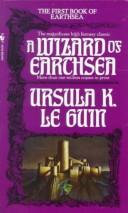
Ged, the greatest sorcerer in all Earthsea, was called Sparrowhawk in his reckless youth.
…
A wizard's journey in a world where true names are important.
3 stars
An interesting read about the coming-of-age of a wizard in the group of islands known as Earthsea that was raised out of the ocean in the distant past by forces unknown. In this realm, magic and control of an item by magic comes by knowing the true name of the object. This also applies to the wizards; for to reveal to a fellow wizard your true name implies trust that your true name would not be used against you.
The story starts with a young boy who discovers a knack for magic. After learning a few simple spells, the boy manages to protect his village from marauders, which gets the attention of a powerful wizard who proceeds to tutor him. But when the boy's desire for magical knowledge grows faster than the wizard is willing to teach, he goes off to learn it from the school at the heart …
An interesting read about the coming-of-age of a wizard in the group of islands known as Earthsea that was raised out of the ocean in the distant past by forces unknown. In this realm, magic and control of an item by magic comes by knowing the true name of the object. This also applies to the wizards; for to reveal to a fellow wizard your true name implies trust that your true name would not be used against you.
The story starts with a young boy who discovers a knack for magic. After learning a few simple spells, the boy manages to protect his village from marauders, which gets the attention of a powerful wizard who proceeds to tutor him. But when the boy's desire for magical knowledge grows faster than the wizard is willing to teach, he goes off to learn it from the school at the heart of magic in Earthsea.
There he learns magic and also discovers friends; and possibly make enemies. In his desire to prove himself, he casts a powerful spell that calls up an unknown entity from the dark, which scars him before being pushed away from the school. As he recovers, he learns the truth; the dark entity is still there, waiting for him to emerge and hungry to possess him.
When at last his training is finished, he goes out into the world and protects a region from attacking dragons. But it is only a diversion, for the dark force is there, waiting for him and the time would come when it would possess him, or he will conquer it.
As he encounters and escapes from the force, he gradually learns more about it but lacks one thing to overcome it: its name. Yet, it is only during the final confrontation with the force far from Earthsea itself, does he learn it and, in doing so, learn about himself.
A fascinating, light tale about growing up, making mistakes, learning and making friendships that make the book a nice read.
Offers examples of 50 real-life matriarchs who gave everything to protect their children and causes, …
On historical mothers who changed their cultures and societies.
3 stars
An entertaining read, highlighting women (who were mothers) doing things not expected by the culture or society of the time, resulting in change, sometimes for the good and sometimes for the bad. Some mothers became rulers, others martyrs; some are mostly forgotten, while others are celebrated. But they all show the determination that only motherhood can sometimes provide.
As with his previous book, Rejected Princesses, a few pages are devoted to each of them, starting with his own illustration and followed by a write-up written by him. He tries to keep to the documented facts as much as possible but notes that history is written by the winning side: some women didn't end up winning, so the stories written about them may not be true and embellished to either praise them or (more often) to denigrate them.
Still, the book contains lots of interesting stories about women (who …
An entertaining read, highlighting women (who were mothers) doing things not expected by the culture or society of the time, resulting in change, sometimes for the good and sometimes for the bad. Some mothers became rulers, others martyrs; some are mostly forgotten, while others are celebrated. But they all show the determination that only motherhood can sometimes provide.
As with his previous book, Rejected Princesses, a few pages are devoted to each of them, starting with his own illustration and followed by a write-up written by him. He tries to keep to the documented facts as much as possible but notes that history is written by the winning side: some women didn't end up winning, so the stories written about them may not be true and embellished to either praise them or (more often) to denigrate them.
Still, the book contains lots of interesting stories about women (who were mothers). He prefaces each story with a key indicating the maturity and violence featured in each story so that you can avoid those if you wish.
With human populations growing, we're having an increasing impact on global ecosystems, and nowhere do …
On organisms evolving and coping with a new environment: urban areas.
4 stars
A fascinating and easy to read book about one area that tends to be ignored: the evolution of organisms in a new landscape that is rapidly growing in size around the world: cities and urban landscapes. In numerous chapters organized by sections, the author shows what organisms are taking advantage of the new urban ecological niches opened up by human cities, what evolution has been doing to adapt organisms to an urban life and what might be in store for the future.
The first section gives an overview of the urban jungle. The author traces the history of urban ecology and looks at various cities and some of the animals and plants that inhabit them. He shows how species that are generalist and have been preadapted to live in a natural environment that resembles the environment in cities are the ones that are most successful at making a living …
A fascinating and easy to read book about one area that tends to be ignored: the evolution of organisms in a new landscape that is rapidly growing in size around the world: cities and urban landscapes. In numerous chapters organized by sections, the author shows what organisms are taking advantage of the new urban ecological niches opened up by human cities, what evolution has been doing to adapt organisms to an urban life and what might be in store for the future.
The first section gives an overview of the urban jungle. The author traces the history of urban ecology and looks at various cities and some of the animals and plants that inhabit them. He shows how species that are generalist and have been preadapted to live in a natural environment that resembles the environment in cities are the ones that are most successful at making a living in an urban setting.
The second section examines whether evolution by natural selection can operate in such relatively short spans of time, and the answer is yes. Using various examples, like the classic moth study (later verified to be correct) showing that the moths adapted their colours to match sooty surroundings, grass that produce heavier seeds (to stay on nearby soil patches in pavements) and possibly birds that grew shorter wings (to be better at escaping cars and prey), the author shows that evolution can indeed work on timescales of centuries or decades, contrary to what Darwin believed when he first proposed evolution by natural selection. However, further studies are needed to determine whether the evolutionary changes are really due to changes in the genes of the organism or due to gene expression being enhanced or reduced.
The third section looks at the various ways evolution might be acting on organisms. One is the organism adapting to the environment: finding new ways to get food by, for example, learning to open bottle caps to get to the cream from milk bottles, or by leaving walnuts on streets to be cracked open by car wheels. Other organisms are engaged in a "red queen's race", constantly adapting to one another in the battle between predator and prey, now played out differently in an urban environment. Finally, the environment itself can modify the sexual preferences of organisms by, for example, forcing song birds to change their songs, so they can be heard over traffic, or by altering their behaviour to be more or less anxious around humans, vehicles or buildings in urban environments.
The last section looks where we go from here. The evolution of organisms in an urban environment poses major challenges to the organisms themselves, not just from the environment and other organisms, but from humans themselves. The urban landscape is very different from the 'natural' landscape and drives evolution in different ways. The rapid introduction of 'alien' species from other cities (which tends to make the mixture of organisms in cities resemble each other more than the nearby surrounding countryside) poses new challenges. Documenting this change (with the help of amateur naturalists and observers) is required so that we know where things stand now and could help predict how urban evolution may change in the future.
Ester's family was torn apart when a manticore killed her mother and baby brother, leaving …
A fascinaing story where humans use huge rocs to hunt even more deadly manticores.
4 stars
A fascinating story set in a world where huge rocs, bigger than humans, fly and hunt terrifying prey: manticores that prey on humans. Human have made a dangerous pact with the rocs, and now hunt the manticores together.
The story focuses on Ester, a ruhker (roc partner) who at the beginning of the story is paired with a fledgling roc named Zahra. After winning Zahra's trust, and not getting eaten in the process, they train together to hunt smaller prey before they are considered ready, with the help of senior ruhkers, to take on the manticores.
The heart of the story is Ester's relationship with Zahra: for while Ester adores Zahra and trusts her, Zahra may not reciprocate, for she was bought in from the wild and could leave (or kill) Ester at any time. Ester's training and relationship with Zahra are about the only thing keeping them …
A fascinating story set in a world where huge rocs, bigger than humans, fly and hunt terrifying prey: manticores that prey on humans. Human have made a dangerous pact with the rocs, and now hunt the manticores together.
The story focuses on Ester, a ruhker (roc partner) who at the beginning of the story is paired with a fledgling roc named Zahra. After winning Zahra's trust, and not getting eaten in the process, they train together to hunt smaller prey before they are considered ready, with the help of senior ruhkers, to take on the manticores.
The heart of the story is Ester's relationship with Zahra: for while Ester adores Zahra and trusts her, Zahra may not reciprocate, for she was bought in from the wild and could leave (or kill) Ester at any time. Ester's training and relationship with Zahra are about the only thing keeping them together as they journey through the kingdom, being called to hunt manticores that have killed other humans.
That relationship would be put to the test at the end when tragedy strikes, and Ester must now put her trust in Zahra; for in most manticore hunts, the ruhker is the bait to draw out the manticores for the kill. Ester and Zahra's relationship with each other, and with other ruhkers would never be the same.
Based on his popular Instagram comics, Nathan W. Pyle presents a picture book. When the …
On aliens hilariously observing a cat.
3 stars
More comics on the strange blue aliens that behave like us but don't use words like us. Here, the 'Lifegiver' and 'Offspring' make notes on what a strange furry creature is doing in their home and try to emulate its behaviour, often failing miserably. Until, that is, that figure out what it likes.
More comics on the strange blue aliens that behave like us but don't use words like us. Here, the 'Lifegiver' and 'Offspring' make notes on what a strange furry creature is doing in their home and try to emulate its behaviour, often failing miserably. Until, that is, that figure out what it likes.
Straight from the mind of New York Times bestselling author Nathan W. Pyle comes an …
On funny aliens that do the things we do, only using words we usually don't
3 stars
An interesting, and funny series of comics involving blue aliens on another planet who behave like humans, only they use more convoluted language to refer to the same things, behaviours and actions that we would do: like "flying machine's side-portal responsibility zone" for a plane's exit row seat. They mean the same thing, only the aliens' words are, strangely, more correct and funnier.
An enjoyable book, just to see how aliens might refer to the same things and actions we do in a more, well, alien manner.
An interesting, and funny series of comics involving blue aliens on another planet who behave like humans, only they use more convoluted language to refer to the same things, behaviours and actions that we would do: like "flying machine's side-portal responsibility zone" for a plane's exit row seat. They mean the same thing, only the aliens' words are, strangely, more correct and funnier.
An enjoyable book, just to see how aliens might refer to the same things and actions we do in a more, well, alien manner.
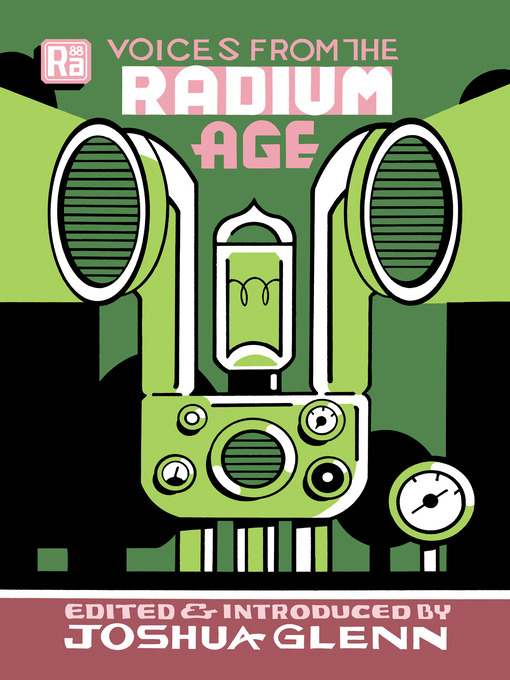
A collection of science fiction stories from the early twentieth century by authors ranging from …
Interesting anthology of early 'proto-SF' stories.
3 stars
An anthology of interesting 'proto-SF' stories from before the era known as the 'Golden Age of Science Fiction'. These stories show that some ideas about aliens, machine intelligence and the unknown are much older than they seem. However, due to their age, some stories may make modern audiences cringe at the depictions of humans at the time (as being 'lesser beings' compared to white people). My favourite stories here are by E. M. Forster and Arthur Conan Doyle, which I have read before in other anthologies, but are still cracking stories that show what SF (and horror) are capable of, even in those early times.
"Sultana's Dream (1905)" by Rokeya Sakhawat Hossain: a woman dreams and is transported to a land where women rule the country and men run the kitchen. It is, of course, a utopia.
"The Voice in the Night (1907)" by …
An anthology of interesting 'proto-SF' stories from before the era known as the 'Golden Age of Science Fiction'. These stories show that some ideas about aliens, machine intelligence and the unknown are much older than they seem. However, due to their age, some stories may make modern audiences cringe at the depictions of humans at the time (as being 'lesser beings' compared to white people). My favourite stories here are by E. M. Forster and Arthur Conan Doyle, which I have read before in other anthologies, but are still cracking stories that show what SF (and horror) are capable of, even in those early times.
"Sultana's Dream (1905)" by Rokeya Sakhawat Hossain: a woman dreams and is transported to a land where women rule the country and men run the kitchen. It is, of course, a utopia.
"The Voice in the Night (1907)" by William Hope Hodgson: a sailing vessel is hailed by a lone voice which refuses to reveal himself. But he tells the sailors the story of how he ends up being marooned on an island with nothing to eat but a fungus that slowly reveals its horrors.
"The Machine Stops (1909)" by E. M. Forster: in a future where all of humanity lives in isolated underground cells, and their every need is catered to by the Machine, one mother reluctantly makes a journey to visit her son, who tells her an incredible story of surviving a trip to the surface of the Earth. But that would not be the last of it, for he would later tell her that the Machine is stopping. And that may well spell doom for humanity.
"The Horror of the Heights (1913)" by Arthur Conan Doyle: an airman suspects, from the mysterious deaths of fellow flyers, that there is some kind of 'jungle' in the air. What he discovers, as later found written down in a stained journal when he journeys high up in the air, would be both wonderful and horrifying.
The Red One (1918)" by Jack London: a jungle explorer hears an extraordinary sound coming from the interior of a jungle, leading to a voyage filled with violent encounters with native tribe until he gets to the truth behind who or what is making the sound. But he may not survive to show it to the world.
The Comet (1920)" by W. E. B. Du Bois: Earth passes through the tail of a deadly comet, and the only two survivors in the city are a lowly black bank worker and a wealthy white heiress.
"The Jameson Satellite (1931)" by Neil R. Jones: an eccentric person arranges for his dead body to be sent into space so that it would not be consumed by earthly decay. Millions of years later, an alien race discovers his body and revives him in a body of metal. Now, he has to decide if all he craves is to follow the human race into death, or join the aliens on a voyage of discovery.
A better than average issue with nice stories by Matthew Hughes, Corey Flintoff, Ashley Blooms and William Ledbetter with an interesting story by Rachel Pollack about fantastic cities featured during a search by the protagonist.
"The Phobos Experience" by Mary Robinette Kowal: an interesting story set in an alternate timeline where we have a colony on Mars. An astronaut there is tasked to help a military unit investigate the moon Phobos. An unexpected finding there hints at possible moves by the military to get a foothold in the Martian civilian colony.
"The Prevaricator" by Matthew Hughes: an entertaining piece about a boy who discovers early in life that he can get rewarded by creating and then taking away unpleasant situations that people are uncomfortable with. He grows rich by planning cons to create and then remove unpleasant social situations. Then he hits upon an …
A better than average issue with nice stories by Matthew Hughes, Corey Flintoff, Ashley Blooms and William Ledbetter with an interesting story by Rachel Pollack about fantastic cities featured during a search by the protagonist.
"The Phobos Experience" by Mary Robinette Kowal: an interesting story set in an alternate timeline where we have a colony on Mars. An astronaut there is tasked to help a military unit investigate the moon Phobos. An unexpected finding there hints at possible moves by the military to get a foothold in the Martian civilian colony.
"The Prevaricator" by Matthew Hughes: an entertaining piece about a boy who discovers early in life that he can get rewarded by creating and then taking away unpleasant situations that people are uncomfortable with. He grows rich by planning cons to create and then remove unpleasant social situations. Then he hits upon an idea to involve a wizard to create an even more unpleasant situation. But that would eventually lead to a very uncomfortable situation for himself.
"The Queen of the Peri Takes Her Time" by Corey Flintoff: a fantasy tale involving a beautiful, unworldly being who will remove a promised body part if your promise to love the Peri is broken. One person has lost his hand to her. Now another comes, looking for help for an even more vital body part that will be lost in his broken promise.
"Freezing Rain, a Chance of Falling" by L.X. Beckett: in a future where wealth and social standing is determined by your social media popularity, one man loses it all when his attempt to gain social points by criticizing another socialite backfires. Then, he is offered a chance to regain it by working on a story about illegal medical drugs by a very wealthy and 'artistic' eccentric lady. As the story proceeds, he begins to realize that the lady may be more interesting in turning him into part of her private, grotesque art work, and has to figure out how to escape.
"The Adjunct" by Cassandra Rose Clarke: a funny story about an adjunct faculty member tasked to teach students at a college how to use a peculiar indexing and referencing system in their work. Trying to understand the system better (so she can teach it better) leads her to discover the sinister origins of the system as a means to take over the world. But, as it turns out, the world might be safe due to the students themselves.
"Visible Cities" by Rachel Pollack: growing up, a girl is suddenly aware of another world hidden from ours that only she can see. This draws the attention of a secret society, who points her to a teacher. When the teacher vanishes, she goes on a journey to various kinds of hidden cities to find him. The conclusion of her search would be an interesting one and hints at a bigger plan that she will be part of.
"Bedtime Story" by James Sallis: a short, fragment of a story about a future when civilization is apparently breaking down due to an alien virus. In this story, a man looks for the body of his former partner. The journey would show how much the world has changed.
"Morbier" by R.S. Benedict: a chilling story set in a country club where waiters and waitresses suffer abuses while they work. One unusual person suddenly arrives and is given the job as a waitress. Her unusual behaviour climaxes when she claims to be a time-traveller and, she has a terrible job to perform to the guests at an upcoming party.
"Hainted" by Ashley Blooms: an interesting story involving 'haints' which are parts of a person left behind in coal mines, squeezed out by the unrelenting pressure of working in such confined, stressful underground mining conditions. A boy convinces a girl that her father's haint must be found if she is to restore her father (who has been acting distant). But as she journeys into the coal mine and learns more about haints, she discovers that finding her father's haint may not be the best way to recover her father.
"Broken Wings" by William Ledbetter: a fast-paced story about an asteroid miner who discovers an artefact and asks for the help of a flight dispatcher on Deimos to put his claim on it. But their plans are interrupted in a sudden and suspicious manner by a customs official. As news of the discovery spreads, the dispatcher will find herself involved in a web of intrigue and needs to think fast if she is to save the miner and the discovery.
When a detective, a new mother, is assigned to the case of a horrific triple …
Tragedy strikes when the people you love become 'others'.
4 stars
A fascinating tale that starts off as a slightly futuristic detective story involving a shocking murder of a family and a search for the missing mother by a detective. But it suddenly switches gear when the detective discovers that the people she knows and love don't appear to be what they are.
The two sides of the story are obviously connected to the reader, but it would require the detective, in her new state, to continue with the investigation and connect the dots before coming to the same conclusion and figuring out how they might be connected.
A fascinating story about dealing with a world that suddenly appears 'wrong' and working through the evidence to come to the correct conclusion.
A fascinating tale that starts off as a slightly futuristic detective story involving a shocking murder of a family and a search for the missing mother by a detective. But it suddenly switches gear when the detective discovers that the people she knows and love don't appear to be what they are.
The two sides of the story are obviously connected to the reader, but it would require the detective, in her new state, to continue with the investigation and connect the dots before coming to the same conclusion and figuring out how they might be connected.
A fascinating story about dealing with a world that suddenly appears 'wrong' and working through the evidence to come to the correct conclusion.
An average issue with interesting stories by Rachael Cupp and Paul Crenshaw.
"Grey Halls" by Rachael Cupp: in a distant future, humanity lives in a closed-up world with only fragments of the past available. From the fragments, one composer has come up with a composition called "Grey Halls" that earns him a chance to travel to the past. What he discovers there will shake his artistic abilities and leave to wonder whether there is truly anything new to compose.
"Superbright" by Ryan Row: a growing up tale of a boy who can give off heat and light, in a world where people with super abilities exists. Going through school, forming a super team, fighting evil was all standard until one day, he gets really super abilities - abilities that would bring his whole world crashing down.
"Tumblebush" by Darby Harn: a …
An average issue with interesting stories by Rachael Cupp and Paul Crenshaw.
"Grey Halls" by Rachael Cupp: in a distant future, humanity lives in a closed-up world with only fragments of the past available. From the fragments, one composer has come up with a composition called "Grey Halls" that earns him a chance to travel to the past. What he discovers there will shake his artistic abilities and leave to wonder whether there is truly anything new to compose.
"Superbright" by Ryan Row: a growing up tale of a boy who can give off heat and light, in a world where people with super abilities exists. Going through school, forming a super team, fighting evil was all standard until one day, he gets really super abilities - abilities that would bring his whole world crashing down.
"Tumblebush" by Darby Harn: a rich old woman asks an investigator to find her missing daughter in a world where the climate has changed, a powerful corporation owns the computing servers and people make a living by taking photos for the corporation and hoping to be noticed.
"P.Q." by James Warner: researchers investigating ant nests discover some nests piling together structures with no apparent purpose. Investigating them would reveal the structures may be related to the way the ants sense the world through scents and chemicals, and perhaps to store knowledge. But the ants would be threatened by approaching fires unless something is done to save them.
"Throw Caution" by Tim Major: prospectors on Mars converge on an area discovered to have Martian life: a crab that has a jewel embedded in them. But the pickings are few and hard to come by for a new group unless they take a chance during a storm and chase after the crabs and discover their purpose.
"So Easy" by Bonnie Jo Stufflebeam: in a dying country, a mother and child make a final journey to the sea to end it all.
"Eyes" by Paul Crenshaw: a fascinating tale told by a pair of eyes found in a stream one day by a boy. Gradually, the boy learns the story of the country where the eyes come from, where eyes are passed down from parent to child over generations, gathering knowledge as the eyes see the world.
Amusing science cartoons about the natural world including animal dating profiles, wildlife wine pairings, threat …
A collection of funny and thoughtful nature comics.
4 stars
A funny and entertaining collection of comics originally published on the Bird and Moon website [ rosemarymosco.com/comics/bird-and-moon ]. The information contained in most of the comics are factual, but they are presented in an entertaining way that will make them stick in your mind.
But not all the comics are funny; those dealing with environmental degradation and climate change are definitely not meant to be funny, but are thoughtfully presented.
You will definitely learn something new from the various comics in the book. The website is, of course, still worth visiting for new comics not featured in the book.