

xyhhx wants to read Confronting Counterinsurgency by Joy James

Confronting Counterinsurgency by Joy James
As we step into an era of rising fascism and normalized genocide, Confronting Counterinsurgency: Cop Cities and Democracy’s Terrors is …
/shēsh/ · they/them
—
i make software, noodles, and poor judgment calls
—
i read slowly and rarely but i wanna change that. i want to read about things i don't know much about. on this account i'll probably focus on anarchism and how it relates to many things, intersectionality, and environmental issues
This link opens in a pop-up window
xyhhx has read 0 of 12 books.

As we step into an era of rising fascism and normalized genocide, Confronting Counterinsurgency: Cop Cities and Democracy’s Terrors is …

As the world grapples with the escalating climate crisis, ecosystems are collapsing, and the planet’s future hangs in the balance. …

From the hosts of The War on Cars podcast, a searing indictment of how cars ruin everything—and what we can …

"A look at what the American lifestyle has done to the environment―and how to move toward a better future.
In …

In For a Liberatory Politics of Home, Michele Lancione questions accepted understandings of home and homelessness to offer a …

Are language and culture uniquely human, justifying an exceptionalism that sets people apart from the rest of nature? New discoveries …

On May 2, 1973, Black Panther Assata Shakur (aka JoAnne Chesimard) lay in a hospital, close to death, handcuffed to …

The notion that everyone wants sex–and that we all have to have it–is false. It’s intertwined with our ideas about …
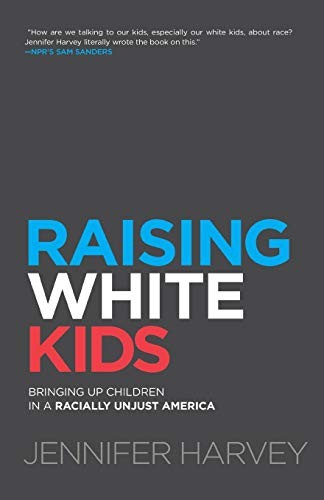
Consider the moments in which white children are taught to not notice race. There are almost always moments in which a white child hears that it's not good to notice the race of a person of colour. it is rare-to-never that children are told not to notice when someone is white. White is typically not marked in the same way that being Black or Latino/a is marked. Thus a message intended to communicate that "all races are good as each other, don't notice!" is actually received by kids as "it doesn't matter that person is Black or Latino/a, we should like that person anyway." The implication is that blackness or brownness is somehow undesirable or shameful. It shouldn't be held against the person. And, more subtly, we white people are somehow doing well and being kind by not noticing that difference.
— Raising White Kids by Jennifer Harvey (Page 34 - 35)
Such nuanced, complex, challenging conversations are a fundamental necessity of parenting children of colour. No obvious parallels exist for white families. As a result, racial conversations in white families tend to be one-dimensional.
In contrast to "the talk", for example, a one-dimensional teaching becomes "police are safe; go find one if you are in trouble". In contrast to "we should all be equal, we all have equal worth, but we don't get all experience equality", a one-dimensional teaching becomes "we are all equal".
The relatively poor quality of racial conversations between white parents and their children is a key reason why white students look like deer in headlights. For white students in my college classroom the fear is different from what students of colour may experience. Because, prior to this point, they are less likely to have been actively nurtured of their understanding of race and its meaning in their lives, white students are generally far, far behind their peers of colour. Their racial understanding is underdeveloped, at best, deeply confused at worst. Their experience is something like only ever having been taught basic addition and suddenly being thrown into a calculus class.
— Raising White Kids by Jennifer Harvey (Page 14)

This New York Times best-selling book is a guide for families, educators, and communities to raise their children to be …

Upending the conventional wisdom around meat, The Omnivore's Deception: What We Get Wrong About Meat, Animals, and Ourselves, offers a …

For more than a century, governments facing financial crisis have resorted to the economic policies of austerity―cuts to wages, fiscal …
It started strong, emphasizing the gravity of the situation Adam describes as "the Long Emergency", which is to say imminent climate and societal collapse. He describes first and second hand accounts of grassroots efforts of communities to sustain themselves in the face of disaster, despite the system failing them.
The second and third chapters felt like a long string of references that, to me, felt a bit drawn out; but I guess painted a picture.
The last chapter felt more succinct, talking about what all of the preceding information meant for us today and the near future. It was very quotable, as you might've noticed by me quoting it three times today 😅
The conclusion was also nice and hopeful